How do you care for a money sweet flag bonsai to keep it in the best condition?
Money sweet flag stays evergreen all year round and has glossy leaves. Planted in front of and behind a house, it not only beautifies the environment but also brings vibrant life to its surroundings. For this reason, money sweet flag is widely used in garden planting. In addition, money sweet flag adapts strongly to its environment; even when growing in harsh conditions, it can thrive and become a beautiful sight.
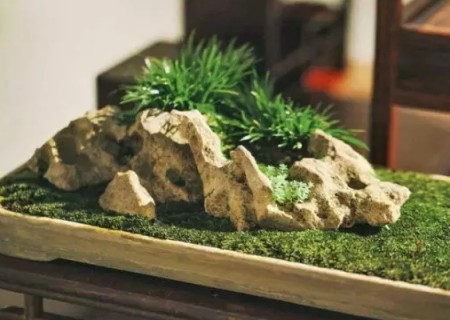
Money sweet flag is not only widely used in garden cultivation; many plant enthusiasts also turn it into bonsai to admire. However, some enthusiasts have found that money sweet flag is attractive but not all that easy to look after. To address the difficulties of caring for and managing money sweet flag bonsai, today we will explain this issue for everyone. If anything is not quite right, enthusiasts are welcome to correct us!
1. Light
Because money sweet flag likes warm light, when growing it at home you should place the bonsai in a bright spot where it can receive ordinary-intensity light. In summer, when the sun is blazing, be sure to provide shade, while in the cold winter you can put it on a balcony so it enjoys the warm winter sun.
2. Temperature
Money sweet flag's temperature requirements are usually met at room temperature, and it grows well under such conditions. Of course, money sweet flag is fairly cold-tolerant and can even withstand a low temperature of 4°C. To achieve the best growing conditions, it is recommended to keep it indoors and let it receive scattered light.
3. Watering
Money sweet flag likes moist environments, so it should normally be watered more often, especially in the hot summer, when we should increase watering and make the soil in the pot thoroughly wet. In addition, we should often spray water on the plant and its surroundings to raise humidity, so as to better meet the moisture-loving growing requirements of money sweet flag bonsai.
4. Fertilising
Once a money sweet flag bonsai enters normal care and management, it can be given a liquid fertiliser once every half month during the growing season. Of course, in addition, according to the plant's growth needs, we can also apply one or two extra top-dressings outside the roots. So what happens if you do not fertilise for a long time? In fact, money sweet flag is not a plant that greatly likes fertiliser, because it tolerates poor soil; even without fertiliser it can still grow normally, and without fertiliser its leaves become finer and more ornamental.
5. Pruning
Many enthusiasts find during cultivation that their money sweet flag bonsai develops withered leaves. In this case, it is recommended to cut off all the withered leaves. Moreover, money sweet flag is a "clean" character, so the cut withered leaves should be cleared away promptly, and if weeds are found in the pot, they should likewise be cleared away. Only in this way can the healthy growth of money sweet flag be helped, and at the same time the ornamental value of the money sweet flag bonsai can be improved.
6. Repotting
For old money sweet flag plants that have been growing for more than 2 years, we should repot them in good time; at this point there are no particular soil requirements, and ordinary garden soil will do. When choosing a new pot, it is recommended to choose a watertight bowl pot, because money sweet flag likes moist environments and will not develop root rot from soil that is too wet. Of course, when repotting, it is best to apply some base fertiliser at the bottom of the pot, add soil, then dig a hole and plant the plant in it.