How to grow a ginkgo bonsai? A full breakdown of care methods
The ginkgo tree has a graceful posture, simple and elegant, and is often made into bonsai to present to the world. In the previous article, the editor already explained how to make a ginkgo bonsai; I wonder if everyone has learned it. If you have not learned it, you can go back and review the lesson. Today, we will next tell you how a ginkgo bonsai is cared for.
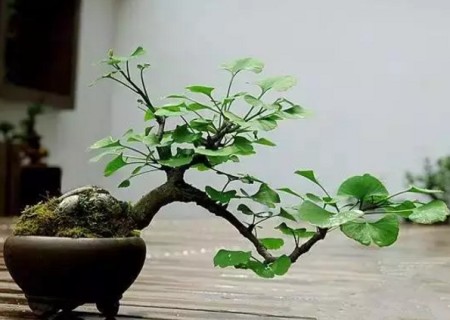
1. Soil
Before talking about soil requirements, let us review the choice of pot for cultivating a ginkgo bonsai. Because the ginkgo root system is very deep, when planting ginkgo we must choose a relatively deep pot. Ginkgo's requirements for soil are also very simple: as long as the soil is fertile, loose, and good at draining water, it is fine; sandy soil is recommended. Of course, if it is loam rich in humus, that is even better.
2. Environment
Because ginkgo is a sun-loving plant, we usually just need to place it in an environment with plenty of sunlight, good air circulation, and relatively high surrounding humidity. Of course, although ginkgo likes light, in the hot summer with the blazing sun, it should still be given appropriate shade; ginkgo is cold-tolerant, so in winter it can also be placed outdoors, but when the temperature is too low, it is best to bury the pot in the soil, which can avoid frost damage and prevent it from affecting plant growth.
3. Watering
Ginkgo likes a moist environment, so the potting soil cannot be too dry. In high-temperature summer weather, because ginkgo leaves are large, they easily evaporate a large amount of water, so water should be replenished in time. Usually water in the morning and evening, and continue every day without interruption; after entering autumn, watering can be appropriately reduced. It should be noted that although ginkgo likes moisture, water must not be allowed to accumulate in the pot; long-term water accumulation not only affects plant growth but also damages the root system.
4. Fertilizing
Spring and summer are the periods of vigorous ginkgo growth, so we need to supplement nutrients for it. Usually applying some thin cake fertilizer water or human and livestock manure is enough; this can ensure nutrient supply while the plant grows rapidly, and the leaf color will also remain bright. After entering winter, we need to give the ginkgo bonsai appropriate additional fertilizer, but there are also requirements for choosing the fertilizer; organic fertilizer is recommended, such as decomposed cake fertilizer.
5. Pruning
Since it is a bonsai, it naturally cannot lack ornamental value, so pruning during care and management is very important. Because ginkgo leaves are large, when pruning branches and leaves we should thin them out; if the branches and leaves are too dense, it will inevitably affect the ornamental value of the ginkgo bonsai. Of course, we should also appropriately wire and shape it, which can not only maintain its original graceful posture but also improve its ornamental value.
6. Repotting
Repotting is also an important part of the care and management process for a ginkgo bonsai, but the right timing must be chosen for repotting. Usually repotting can be done once every 2 years, preferably in early spring. By then, the root system of the ginkgo bonsai is already very developed, so during repotting you can prune off overly long roots, remove some old soil, and replace it with some new soil.
The above are the care and management methods for a ginkgo bonsai. I believe that as long as everyone does the care and management work according to the above methods, your ginkgo bonsai will surely be grown robust and bright.