How to grow heuchera (coral bells), and can it be kept indoors?
Gardeners who refuse to settle for mediocrity always want to pull out all the stops to fill their garden with color, and the colorful little sprite——heuchera can help everyone fulfill that wish. Heuchera has a great variety of leaf colors, and the leaf color changes richly with different seasons, environments and temperatures, which is why it is called God's palette.
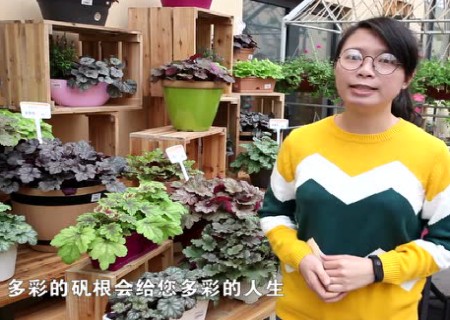
Like succulents, heuchera is also good at seducing everyone with its leaf color. Its horticultural cultivars are extremely numerous, and its leaf colors are rich and varied. Add to that its good qualities of cold resistance, shade tolerance and resistance to damp heat, and it has gradually become people's new favorite.
Below is a brief introduction to the various details of heuchera care, including pot, soil, light, temperature, water and fertilizer, to teach you to grow heuchera easily and bring you a colorful heuchera world.
1. Choosing a pot
Heuchera does not need a light-transmitting pot. The principle is "big pot for big seedlings, small pot for small seedlings", and a root-to-crown ratio of 4:6 is more suitable. That is, for a seedling with a 6cm crown width, refer to choosing a pot with a 4cm diameter. Avoid situations like "a small seedling propped up in a big pot, a big seedling eating from a small bowl". (Incoordinated root growth space, and great difficulty in water and fertilizer management) In addition, the chosen pot must have drainage holes.
2. Soil
A lightweight medium with low bulk density, and also with relatively large porosity, with a reasonable ratio of capillary pores to aeration pores. It can both fix and support the plant and provide good water-holding and fertilizer-holding capacity and aeration capacity for plant growth. At the same time, also note that the chosen medium should be slightly acidic. It is recommended to choose small bagged peat soil sold on the market. After potting, you can spread a thin layer of granular decorative medium on top of the growing medium.
3. Light
Heuchera is relatively cold-resistant, likes sunlight and is shade-tolerant, and is very suitable for care in a cool, semi-shady place. In summer, avoid direct sunlight, shade it appropriately, and remember to keep it ventilated. In winter, heuchera can be placed in a sunny spot for care.
4. Temperature
Heuchera has particularly strong cold resistance; according to data, it can withstand extreme low temperatures of minus 38°C. For home care, the main consideration is to avoid temperatures above 35°C in summer as much as possible. Between 10°C and 30°C is most suitable for its growth.
5. Ventilation
Mainly ventilation during the day; its purpose is to coordinate the release rate of water from within the plant and from the water in the potting medium, while maintaining the dynamic balance of the air composition in its living environment (stable oxygen and carbon dioxide concentrations). A certain degree of ventilation in summer, spring and autumn is almost essential, and can lower the temperature to a certain extent and within a certain range, improving its living environment.
6. Watering
When growing heuchera, watering should be moderate. It does not like an overly moist growing environment, so water by the "dry-wet cycle" method: water again after the surface of the soil has dried. In summer, watering must be controlled, and when watering, it must be done thoroughly, which can promote the normal growth of heuchera.
7. Fertilizing
When growing heuchera, also pay attention to appropriate fertilizing. In fact, heuchera grows even better in soil with a lower fertilizer content, but it can also tolerate soil with a higher fertilizer content. You can supplement a bit more nitrogen fertilizer.
8. Pests and diseases
The diseases that may appear when heuchera is kept at home are mainly fungal diseases, and regular use of fungicides purchased on the market can effectively prevent and treat them. The pests that may appear when heuchera is kept at home are mainly those spread by flying in on their own (such as moths flying into the succulent living environment and laying eggs and hatching) and those brought in (entering with seedlings or medium in the form of eggs or nymphs). These are the things to pay more attention to when keeping heuchera at home. Insecticides are not recommended.
As a foliage plant, heuchera's most outstanding feature is of course its colorful, highly textured leaves of various colors. And as a foliage plant, you also do not need to work hard to grow flowers; as long as there are leaves, you can appreciate its beauty. Of course, its flowers are also very beautiful.
The heuchera plant has strong cold resistance, and it is said to be able to withstand low temperatures of up to minus 34 degrees, so in most areas of our country, heuchera can be grown outdoors in the open without special measures such as heating and insulation.
Can heuchera be kept indoors? In summer, heuchera must avoid direct sunlight. Heuchera is not afraid of cold, but it is afraid of heat, so extra attention is needed in summer. It is best to place it in a cool place or indoors with air conditioning.