Summary of common Gloxinia care problems, all answered clearly in one go
The Gloxinia growing methods and precautions in this article are all practical stuff. It gathers questions posted by some flower lovers about Gloxinia, then, based on experience and the answers from flower lovers, it is reworked a second time. It is very helpful for flower lovers to understand Gloxinia, and flower lovers can use this article to gain a more comprehensive understanding of Gloxinia.
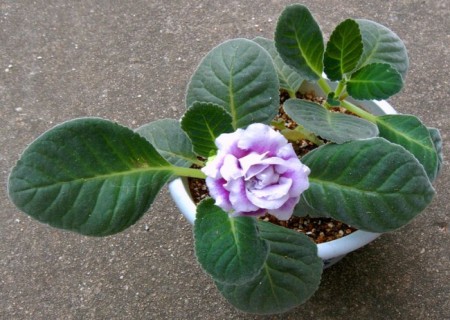
Gloxinia (Sinningia speciosa) is a perennial bulbous flower of the Gesneriaceae family. It likes a warm, humid environment and does not like direct sunlight. Because its demand for light is low, its flower colors are bright and rich, including pink, red, purple-blue, white, and bicolor, and its plant form is also small and cute, it is very suitable for placing on a desk indoors. Now let's take a look with the editor at how to grow Gloxinia!
Q: After buying Gloxinia from the flower market, I found the buds had rotted, some from the stem part, some from the flower. What is going on?
A: For a flower just bought back, the environment changes abruptly (too dry or too wet, a big change in environment, wrong fertilizer, spraying water will all cause this). You can cut off the rotted parts and wait for it to adapt to the conditions in your home, and it will get better.
Q: After repotting, my Gloxinia wilted. What is going on?
A: Gesneriaceae plants need moisture retention after transplanting; this is basically true for all Gesneriaceae. It may also be that the lower part was damaged, so wait a while and then see how it looks.
Q: The lower leaves of my Gloxinia are curling badly. What is going on?
A: Humidity is not enough, so maintain humidity. (Also mites)
Q: The leaves of Gloxinia seedlings that have just grown true leaves are obviously turning yellow. What is going on?
A: Low temperature or insufficient nutrients (I have encountered this myself; in my case it was because of low temperature).
Q: What should I do after the Gloxinia flowering period has passed?
A: (1) If it is spring, directly cut back the top, leave 2 leaves, and it will sprout very soon; just care for it normally. (2) If it is autumn, it depends on the conditions where you are and whether it can overwinter. If there is heating, care for it normally as in spring. If there is no heating, you can harvest the bulb and promote sprouting in spring.
Q: Does my Gloxinia have red spider mites? How should I deal with them?
A: Treat with Huhuashen or abamectin. Also, spider mites like dry environments, so you can place the flower in a well-ventilated place.
Q: Why have the leaves of my Gloxinia seedlings turned white?
A: High-temperature albinism.
Q: Other people's Gloxinias bloom with more than a dozen flowers, while mine only blooms one or two. What method can make it bloom more?
A: Light is the key (my personal suggestion).
Q: May I ask, for Gloxinia seedlings just grown from seed, do they still need to be grown covered, or is it better to open the lid?
A: Grow them covered, with diffused light, and if the temperature is too high, pay attention to ventilation.
Gloxinia growth habits:
Growth period: January to October, with the temperature kept at 18~23°C, ideally. During this period, high air humidity is required, but it does not like heavy water; avoid rain so the leaves do not rot.
Dormant period: October to January of the following year, with a suitable temperature of 10~12°C. During the dormant period, you can also dig out the underground tuber and store it in a dry place to overwinter, then replant it in soil the next year.
Flowering period: the flowering period is April to November, lasting for several months.