How to grow a boxwood (Buxus) down-the-mountain stump? Detailed care methods
Boxwood likes light, because appropriate light can better promote photosynthesis; boxwood likes water, because its root system is not well developed, making water uptake naturally relatively difficult, so water supply must be ensured through external watering; boxwood is cold-resistant, because wild plants mostly grow at high altitudes; boxwood is afraid of wind, because under the action of wind, water transpires very quickly.
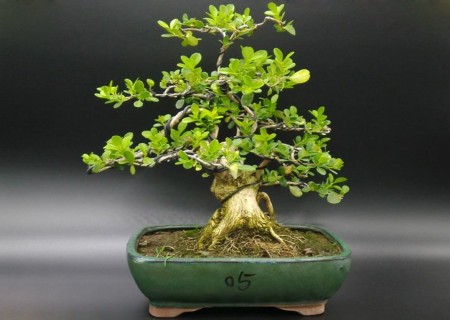
Based on these growth factors, it is not difficult to see that in order to help a boxwood down-the-mountain stump survive quickly, the above habits need to be grasped well. Only by carrying out care according to its living habits can the down-the-mountain stump be ensured to survive smoothly and grow normally. Therefore, for cultivating a boxwood down-the-mountain stump, it should be placed in a spot that can receive sunlight but also needs shelter from wind for care, and water replenishment should be done well in normal times.
But replenishing water for a boxwood down-the-mountain stump is also a skill. The watering method needs to combine misting and watering, avoiding the practice of pouring water into the pot. Because the root system of boxwood itself is not well developed, it cannot transport a large amount of water to all parts of the branches and leaves through the roots, so you can often mist the stump specimen and then combine this with appropriate watering, making water replenishment more scientific and reasonable.
For water replenishment of a boxwood stump specimen, it is recommended to frequently mist the leaf surfaces evenly while watering appropriately, so that water is supplied from both the branches and leaves and the roots at the same time, thus better meeting the plant's water needs. It is recommended to mist the leaf surfaces several times a day. With this method, there is no need to worry about the plant suffering water damage, and not until half a year to a year later, when the boxwood sprouts new buds and they reach more than 2-3 cm, can the frequency of misting be appropriately reduced later.
In addition to watering, fertilizing is also an important measure to promote plant growth, but natural fertilizer is not recommended, because such fertilizer is inconvenient to ferment and store, and the nutrient element content in the fertilizer is not uniform. Therefore, it is recommended to use urea and potash fertilizer mixed evenly with water for spraying.
From Grain Rain to midsummer is the vigorous growth period of boxwood. In order to encourage the plant to sprout tender buds, topdressing should mainly use urea liquid fertilizer, supplemented by potash liquid fertilizer. After summer, the newly sprouted tender leaves of boxwood need to become semi-lignified to pass the winter smoothly, so at this time it should shift to mainly potash liquid fertilizer, supplemented by urea liquid fertilizer. Spray dilute liquid fertilizer about once every 2 weeks, and it is advisable to adopt the method of applying thin fertilizer frequently.
For pruning a boxwood stump, you can train the branches and shape it according to your own creative ideas. First, what needs to be cut off are the old, weak, diseased and disabled branches, slender branches, and branches unfavorable for shaping. Then, just like a barber cutting hair, you need to gather the branches and leaves into a bunch, then cut off about 2-3 cm from the tips of the branches and leaves, shaping the crown into a spherical form.
For those branches and leaves that have not grown into place, you can use metal wire for bending and tying and for pulling and suspending, then use wooden sticks as support below. However, because boxwood has thin bark and brittle branches, it cannot be done in one step and needs multiple stretches to avoid injuring the branches. During the process of bending, tying and pulling branches, it is recommended to place soaked cotton cloth under the metal wire to avoid injuring the branches.
Boxwood can be pruned twice every year, preferably in June and August. Coupled with repeated bud forcing, after about 5 years the stump will shift from the vigorous growth period into a stable growth period. At this time, you can find that the branches and leaves on the stump have already become relatively lush and have grown into many old branches. In this case, we need to carry out hollowing treatment on the stump to complete the bonsai creation. As time goes by, the cut openings on the stump will gradually weather naturally and form old branches.
Repotting can be carried out 7 years after planting a boxwood down-the-mountain stump, because the first 3 years are basically the period of keeping the boxwood alive. During this period, the stump may die or survive, and successfully getting through the first 3 years means the stump has successfully survived; the following 4 years are basically the vigorous growth period of the stump. During this period, as long as care is proper and fertilizing is reasonable, the stump will grow lush branches and leaves, and it will also lay a good foundation for later shaping.