How to Promote Budding in Boxwood Bonsai? Detailed Explanation of Key Techniques
Boxwood has strong stress resistance and tolerance; it can grow robustly even in harsh environments, and its shapes are peculiar. Among its collected wild stumps there is no lack of fine specimens, making it an excellent material for bonsai. Therefore, more and more bonsai enthusiasts are turning it into bonsai for appreciation.
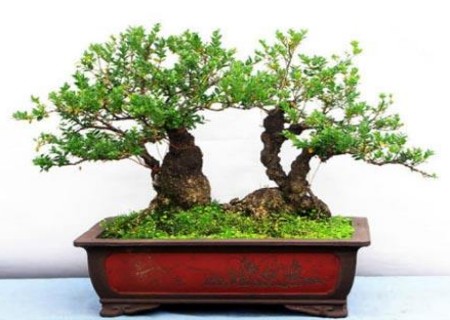
Although boxwood bonsai has many advantages, its shortcoming is that some branches and trunks appear completely bare, which seriously affects the bonsai's shape. To change this situation, the editor drew on the experience of many bonsai friends and, through repeated experiments, finally worked out a set of bud-promotion techniques for boxwood bonsai, thereby greatly improving its ornamental value.
Before sharing the bud-promotion techniques for boxwood bonsai with everyone, let us first learn about boxwood care knowledge, so that it will be easier for us to learn this set of techniques.
Boxwood is cold-resistant and likes light, yet it is not easily subjected to strong sunlight exposure or scorching, so during potting and planting it only needs to receive scattered light; newly potted collected wild stumps should first be placed in a shady spot for a period of time, and normal care should be resumed only after the stump has taken root and sprouted. When watering normally, a small amount of nitrogen fertilizer can be added to promote growth.
Now let us continue with the above topic——how do you make bare branches and trunks sprout new buds? Sometimes leaf drop may occur due to improper care, but this is not a problem; the following method can help it recover.
In fact, the method is very simple, and the required raw material is inexpensive: just buy gibberellin, commonly known as 920, and use it. When using it, appropriately adjust the concentration according to the degree of aging of the branches and trunks. Usually, diluting with water at 1000 times is sufficient. After it has dissolved in alcohol, then add water to dilute it. Dip a brush in the solution and evenly brush it once a day on the places where you want buds and branches to grow; continue for two or three days and it will be enough.
Not long after the above operations, new buds will sprout from the bare branches and trunks. The newly sprouted buds are very tender, so be sure not to touch them, lest they be accidentally injured.