How to grow lucky bamboo in water? These care tips you need to know
Lucky bamboo has extremely high ornamental value. Besides being grown in soil as a household potted plant, it can also be grown in water, which likewise achieves the purpose of ornamentation and purifying indoor air. However, when growing lucky bamboo in water, you need to change the water frequently in the early stage, and also trim the plant's roots at the right time. After the plant has rooted, you should provide it with appropriate light, maintain a suitable temperature, change the water frequently, and so on; only then can you grow lucky bamboo well in water.
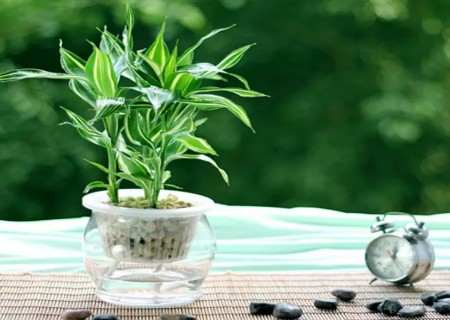
1. Remove the lower leaves
Before the first water propagation, you need to remove the branches and leaves near the base of the lucky bamboo. How much to remove depends on the vase you choose; all branches and leaves within the mouth of the vase should be cut off, which ensures the plant can grow more normally.
2. Treat the bottom
Before placing it in water, use sharp scissors or another cutting tool to cut off part of the end at an angle. This allows the cut at the base to contact water more fully, making it easier to absorb water and also making it easier for the plant to root. Note that the cut needs to stay flat and smooth, with no fuzzy fibers.
3. Water control and water use
It is recommended to use clean fresh water. If you use tap water for water propagation, you need to let it sit for 2-3 days before use; the amount of water poured into the vase should preferably be controlled between 1/3 and 2/3 of the vase. Before the plant roots, change the fresh water once every 3 days. After rooting, there is no need to change the water in the short term; simply top up the water in the vase, and when the climate is dry, spray some water on the leaves.
4. Temperature control
The suitable growing temperature for lucky bamboo is between 16-26°C. In the hot, dry environment of summer, shade it and spray water around it to raise the air humidity; in winter when the temperature is low, take good measures for warmth and water control, and it is recommended to place it in a warm spot indoors to avoid frost damage to the plant.
5. Ensure light
At home, lucky bamboo is mostly kept indoors, but indoor light is relatively dim. It is recommended to place it on a windowsill or another spot with bright light and good ventilation, so it can easily receive light to promote photosynthesis and avoid dead branches and yellow leaves caused by lack of light, which would affect its normal growth.
6. Add nutrients
It is recommended to add nutrients to water-grown lucky bamboo once a month. You can buy nutrient solution, or add an appropriate amount of liquid fertilizer. It is recommended to drip a few drops of vitamin C1 solution into the water when adding water to the vase. In this way, you can ensure the plant absorbs sufficient nutrients and grows more luxuriantly.
Notes:
1. Lucky bamboo likes to grow under natural ventilation conditions. Do not let it be exposed to fan or air conditioner airflow.
2. If an odor appears in the vase, promptly check the water quality, clean the inner wall of the vase, and then replace it with clean fresh water.
3. When you find the plant's branches and leaves turning yellow, it is mostly caused by insufficient light or excessive fertilizing, and corresponding measures should be taken promptly.
4. If you find root rot in the plant in the vase, promptly trim off the rotten parts of the roots, disinfect them well, and then replace with fresh clean water.