How to grow the bamboo begonia? Care methods and points to note
The bamboo begonia (Begonia maculata) is a beautiful plant that is very well suited to growing at home, but recently some gardening friends have noticed that their potted bamboo begonias look listless and lacking vigor. What is going on? In fact, this is caused by gardening friends not having mastered the correct care and management methods in their daily routine, or by not paying close enough attention when the first mild symptoms appeared, which has led to the serious condition seen now.
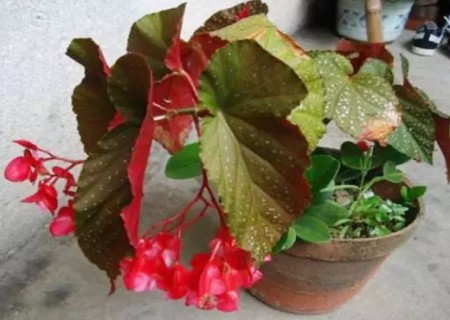
So how do you grow a potted bamboo begonia? Below, the editor explains this for everyone based on their own practical experience in care and management, in response to the situations above.
1. Soil: For a potted bamboo begonia, it is best to choose humus soil with excellent drainage, aeration and nutrient value, because humus soil has a moderate pH, is not prone to compaction, and is more conducive to plant growth.
2. Light: Because the bamboo begonia is rather sensitive to strong light, strong light exposure should be avoided as much as possible; it can appropriately receive diffused light or morning light. Especially in summer, shade measures should be provided to avoid scorching the plant.
3. Temperature: The bamboo begonia likes a warm, humid environment, so as long as these conditions are met, it can grow quickly, with lush branches and leaves and brightly colored flowers. Its most suitable growing temperature is between 19-24°C, and in winter it must not drop below 10°C, otherwise the plant is easily damaged by cold.
4. Watering: As mentioned in the previous point, the bamboo begonia likes a warm, moist environment, so in addition to controlling the temperature well, we should also do a good job of maintaining moisture. The best way to maintain moisture is proper watering, keeping the potting soil constantly moist. Because it is afraid of waterlogging, avoid water accumulating in the pot when watering.
5. Fertilizing: The bamboo begonia is a plant that likes fertilizer, but it should not be given heavy water and heavy fertilizer; during the growing season, a dilute liquid fertilizer is usually suitable. In summer, during the flowering period and in winter, fertilizing the plant should be stopped.
6. Pruning: To keep the potted plant in good shape, we need to prune the plant several times, cutting back branches and leaves that have grown too long and those on the lower part. Through proper pruning, not only can more new branches sprout and the number of flowers increase, but the ornamental value of the potted plant can also be improved.
7. Repotting: Repotting the bamboo begonia is best done in spring. The main purpose of repotting is also to help the plant grow better and to create a good shape for it, so repotting should be combined with pruning.
8. Pests and diseases: For the prevention and control of pests and diseases, the principle of prevention first, combined with control, should be adopted. Water appropriately during care, and do not allow water to accumulate in the pot; too much water not only causes root rot but also easily breeds pests and diseases. Carbendazim can be used to disinfect and prevent disease, and dicofol can be used to clear up pest problems.
The above are the key points on how to care for and manage a potted bamboo begonia. We hope this helps everyone, thank you for reading this article, and please also follow our other featured articles.