How to deal with root rot in bonsai? Learn these few tricks to easily save it
Through nature's baptism, the carving of time and the creativity of bonsai masters, potted plants can become a perfect bonsai masterpiece. Bonsai is often presented to the world full of elegance and beauty, and perfection is a kind of beauty, while flaws are sometimes a kind of beauty too, but there is one flaw that cannot be called beauty, and that is when you find that your bonsai plant has developed root rot. A good bonsai makes us feel delighted, but when something goes wrong with the bonsai, it makes us very unhappy.
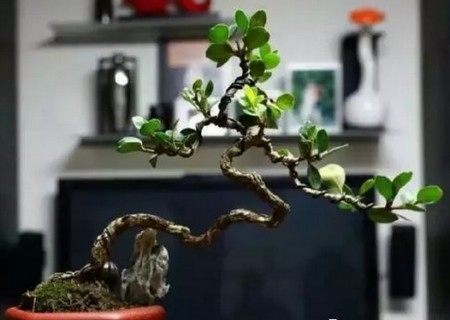
If the potting soil has poor air permeability and you water too much, it will cause a lack of oxygen in the root system of the bonsai plant, leading to yellowing and dropping of leaves, and this is only what we can see with our eyes. Of course, something more serious may be what our eyes cannot directly see, such as root rot in the plant.
So, how do you determine that a bonsai plant has already developed root rot?
1. Compare colors
We can put bonsai plants of the same species together for comparison. If your bonsai plant looks listless and its leaves are drooping, or if yellowing and dropping of leaves are relatively severe, this indicates that the plant in the pot has very likely already developed root rot.
2. Observe the leaf tips
We can observe whether the leaf tips have turned yellow or developed spots. Usually, if there is too much water accumulated in the pot, it will hinder root respiration. If root rot has occurred, it will prevent nutrients from being transported to the leaf tips, thus causing yellowing or pathological changes at the leaf tips.
3. Judge by touch
For a bonsai plant growing normally, its leaves are generally fairly cool. When touched with the fingers, they feel cool, which indicates that the plant is in good growing condition. If you do not feel that coolness, but instead feel a bit warm, or the leaves are too dry and rough to the touch, it means the plant has already developed burnt roots and root rot. This is similar to judging whether someone has a cold or fever by touching their forehead with your hand.
What should you do when a bonsai plant develops root rot?
After discovering that a bonsai plant has developed root rot, we first need to take the plant out of the pot, clear away the soil attached to the plant's roots, wash the roots, and then cut off the roots that have already rotted. After that, soak the plant's roots together in a potassium permanganate solution for disinfection. After disinfection, set the plant aside to dry. At the same time, pour new soil into the pot. You can use perlite, vermiculite and other such highly breathable stone-like materials at the bottom of the pot and transfer the plant to a soilless cultivation mode. Finally, use a soilless cultivation nutrient solution to spray the leaves of the bonsai plant.
After completing the above steps, you can place the bonsai plant in a suitable environment for care and management. After roughly a period of time, you can find that the bonsai plant has already grown new roots. When the newly grown roots have developed to the point suitable for soil cultivation, take the plant out in time for transplanting.
As for how to transplant, this has already been introduced in many of our previous articles, so we will not go into detail again here.