What to Do If Your Gold-Edged Daphne Won't Bloom? A Few Solutions
Gold-Edged Daphne is widely used as a household potted plant because of its extremely high ornamental value, and it mostly blooms around the Spring Festival, with the bloom lasting as long as 2 months, so it is often grown as a holiday flower.
The process of blooming gives people a kind of aesthetic enjoyment, especially with a beautiful potted flower like the Gold-Edged Daphne. But when the flowering season arrives, quite a few growers find that their potted Gold-Edged Daphne simply won't bloom. What exactly is going on? What should you do if your Gold-Edged Daphne won't bloom? Below, the editor will analyze this for everyone.
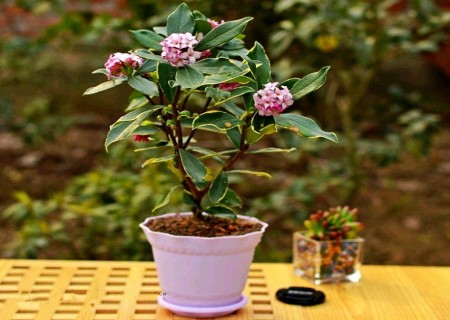
Gold-Edged Daphne is a holiday flower, and its flowering period is generally from February to March. If it fails to bloom when the flowering season arrives, the cause should mainly be traced from the following aspects.
1. Insufficient light
As mentioned earlier, Gold-Edged Daphne is a plant that likes partial shade, but this does not mean it cannot receive light at all. On the contrary, for Gold-Edged Daphne to carry out photosynthesis and promote metabolism, it must be given appropriate light. If the light is insufficient, it will naturally lead to the plant itself storing insufficient nutrients, and even in spring it will be hard for it to recover to a state of rapid growth, let alone provide the nutrients needed for blooming, which can naturally cause the phenomenon of not blooming. Therefore, starting to increase light in autumn is very necessary.
2. Excessive humidity
Everyone knows that excessive humidity is caused by too much water, whether in the air or in the soil. Especially in autumn, because autumn happens to be the stage when the plant's flower buds enter differentiation, too much watering will cause incomplete flower bud differentiation, making it hard to form flower buds, so the plant cannot bud normally, which will naturally lead to the result that it cannot bloom during the flowering season. Therefore, to ensure blooming during the flowering season, doing a good job of water management from autumn onward is very necessary.
3. Excessive fertilization
Many growers have surely experienced fertilizer burn in potted flowering plants caused by excessive fertilization. In fact, fertilizer burn is also one of the important factors affecting the blooming of Gold-Edged Daphne. If too much nitrogen fertilizer is applied, it will make the branches and leaves of Gold-Edged Daphne grow rapidly and vigorously, especially in spring when a large number of branches sprout, and the sprouting becomes excessively vigorous, which is bound to inhibit the growth of the leaf buds formed in autumn and winter, resulting in leggy branches and leaves. Since the nutrients are all taken by the branches and leaves, the flower buds will naturally lack sufficient nutrients to supply the flowers, so the phenomenon of difficulty in blooming or failure to bloom will occur. To avoid leggy branches and leaves affecting blooming during the flowering season, fertilization should be kept as moderate as possible, especially nitrogen fertilizer.