How to grow a Dracaena reflexa in a pot? A detailed guide to cultivation methods
The leaves of Dracaena reflexa are bright green, and most leaves have a golden stripe running down the middle. As long as it is well cared for, it will also bloom. The flowers that Dracaena reflexa produces are relatively small, but the inflorescence is rather long. Keeping a potted Dracaena reflexa at home often symbolizes wealth and good fortune, and it can also be grown as a foliage plant, so gardening enthusiasts who care about home feng shui and environmental friendliness all like to keep one.
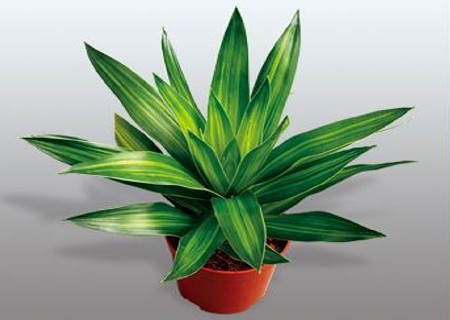
People today like to add a touch of greenery to their homes, and potted Dracaena reflexa is a good choice. Its leaves are elegant and free-spirited, and it has strong shade tolerance, so it is very suitable for growing indoors as a foliage plant and is highly favored by people. So, how do you grow a potted Dracaena reflexa? Below, the editor will share the cultivation methods for potted Dracaena reflexa.
1. Soil
Dracaena reflexa has a fairly strong ability to adapt to soil conditions, so it can grow in either clay soil or sandy loam. But Dracaena reflexa prefers loose, fertile soil with good drainage, and it is even better if the soil is rich in humus. For growing as a household potted plant, it is recommended to use a mix of leaf mold and river sand or burned furnace slag.
2. Light
Although Dracaena reflexa has strong shade tolerance, it also likes light; it just needs to be protected from direct sun exposure in the summer when the sunlight is intense. In other seasons, you can provide it with plenty of light and place it in a spot by a windowsill where it can receive sunlight. However, if it lacks light for a long time, the golden stripes on its leaves may fade in color or even disappear, which will inevitably reduce its ornamental effect, so we need to take care with its maintenance.
3. Temperature
Dracaena reflexa grows best in a temperature environment between 20-30°C, but in excessively hot summer weather, especially in a hot, dry environment above 30°C, shading and cooling measures must be taken, otherwise the plant can easily be scorched and its growth affected. In winter, when the temperature is too low, necessary warmth-retention measures should be taken, keeping the temperature no lower than 10°C as much as possible, otherwise the plant can easily suffer frost damage, because this plant is not cold-tolerant.
4. Watering
Dracaena reflexa has a certain tolerance for mild drought and waterlogging, meaning it has a dual tolerance. Mild dryness and moisture generally will not cause it much harm, so its water requirements are not strict. When watering, stick to the principle of not watering until dry, and watering thoroughly when you do, meaning wait until the potting soil dries out before watering thoroughly, as this is more conducive to the plant's growth. This is because alternating dry and wet conditions can ensure the plant's branches and leaves are denser and the leaf color is brighter, giving a better ornamental effect.
5. Fertilizing
Potted Dracaena reflexa does not have an obvious demand for nutrients. Apart from supplementing nutrients with fertilizer during the growing season, it does not need additional fertilizing at other times. It is also not very particular about the choice of fertilizer; it can be either chemical fertilizer or organic fertilizer, but fertilizing should follow the principle of applying thin fertilizer frequently, and water promptly after fertilizing to dilute it so the plant can absorb it more fully.
6. Pruning
Potted Dracaena reflexa can send out new branches from the base, so as long as water and fertilizer are supplied adequately, it generally grows very lushly. But to improve its ornamental value, we also need to prune it appropriately. Dracaena reflexa not only has strong sprouting ability but is also fairly tolerant of pruning; however, in order not to affect the plant's normal growth, it is recommended to give it some extra water and fertilizer before and after pruning, and the newly sprouted branches and leaves will grow better after pruning. Unlike most plants, pruning Dracaena reflexa is not done to encourage more side branches, but for shaping, to make the plant's form more attractive. (Author: Xiaoshu 2017-08-14 23:05)