Detailed Explanation of Key Techniques for Pine Bonsai Care
In the wild, pine trees mostly grow in high-altitude environments with poor soil, and they have strong tolerance to drought and poor soil, so they can grow well even without fertilizer. As potted trees, in order to promote their rapid growth to meet the needs of shaping, we usually need to supplement nutrients through top dressing. So today, the editor will explain to you the relevant care techniques for pine bonsai.
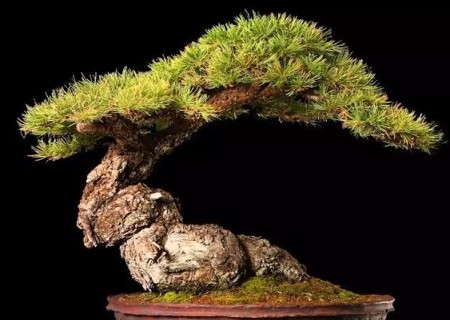
In addition to following normal care and management methods, we also need to master the following care techniques. Only in this way can we keep pine bonsai lush with branches and leaves, elegant and beautiful.
1. Avoid waterlogging
Pine trees are drought-tolerant but not waterlogging-tolerant, so when watering normally, avoid excessive watering that causes water to accumulate in the pot. If too much water is given, it will seriously hinder air circulation in the potting soil, making the originally loose and breathable soil unable to breathe, which easily causes root rot, and then leads to wilting and drying of branches and leaves. This not only affects the ornamental effect, but may also cause the pine tree to die.
2. Fertilize sparingly
Pine trees do not have high fertilizer requirements, but sometimes in order to promote the growth of pine trees, we often do it by top dressing. However, fertilizing also requires technique. Usually, applying a dilute liquid fertilizer once from August to October each year is enough. On this issue, we must not rush for quick results. If too much fertilizer is applied just to pursue growth, the result is often the opposite. As the saying goes, going beyond the limit is as bad as falling short. Excessive fertilization can easily cause fertilizer damage, burning the root system and causing poor growth and other phenomena.
3. Repot at the right time
Pine bonsai generally needs repotting once every 3-4 years, preferably from late September to early October, and of course it can also be done in February to March in spring. Repotting and changing soil at the right time can provide pine trees with more ample growing space and nutrient supply, and can keep pine trees in good growing condition. But some hobbyists think that the more frequently pine trees are repotted, the better. In fact, this is a wrong approach. Pine is a tree species with strong adaptability to the environment. Once it is stable after potting, it should not be repotted or have its soil changed again in the short term. If repotting is too frequent, it will easily lead to the death of the tree.
In addition, to care for and manage pine bonsai well, you should usually provide it with sufficient light and maintain good ventilation. If the air is too dry, we can increase air humidity by spraying water on the leaves. Therefore, the care and management of pine bonsai must not be taken lightly!