How to Grow a Small-Leaf Red Sandalwood Bonsai? A Detailed Guide to Care Methods
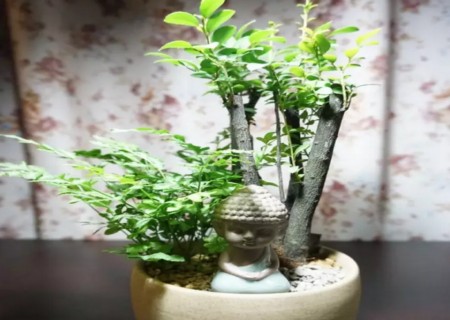
Small-leaf red sandalwood, recognized in the botanical world as a type of sandalwood rosewood, is a greening tree species very suitable for planting in courtyards, and its old stumps are also very suitable for making into bonsai. Small-leaf red sandalwood not only has extremely high ornamental value, but also possesses the effect of refreshing the mind and calming the nerves. It has long been widely sought after for its superior properties and rarity. So, how do you grow a small-leaf red sandalwood bonsai? Today the editor will explain the care of small-leaf red sandalwood bonsai for everyone.
1. Soil
Small-leaf red sandalwood has low requirements for soil, and can grow even in relatively high-altitude and barren places. Of course, small-leaf red sandalwood in special soil environments can produce golden star. You can use red soil, laterite, coastal alluvial soil or sandy soil for planting.
2. Light
Small-leaf red sandalwood likes warmth and sunlight, so to keep it in good growing condition, sufficient light conditions are indispensable. It is recommended to move the bonsai to a balcony or other place with ample light for care and management.
3. Temperature
Although small-leaf red sandalwood likes a warm growing environment with sufficient light, it also has relatively strong cold resistance, and will not be frostbitten even in a short-term low-temperature environment of around 0°C. Moreover, small-leaf red sandalwood can withstand winds below level 10.
4. Watering
Because small-leaf red sandalwood is a tropical tree species with poor drought tolerance, it has relatively high water requirements. It is recommended to water it once every 2-3 days. But watering also requires technique: avoid watering it under direct strong light, and watering should be thorough.
5. Fertilizing
Small-leaf red sandalwood does not have high nutrient requirements, so additional fertilizing may not be necessary. Even when fertilizing, the principle of thin fertilizer and small amounts should be adopted. Apart from appropriately applying some diluted calcium magnesium phosphate fertilizer during the plant's growing season, fertilizing at other times is not suitable.
6. Pests and Diseases
Small-leaf red sandalwood bonsai is generally prone to infection by anthracnose and black spot disease during the seedling or young tree growth period, and the main pests include leaf beetles, scarab beetles, and so on. For the above diseases, diluted Bordeaux mixture or carbendazim can be sprayed for prevention and control; for the above pests, trichlorfon can be used to kill them.
In the process of caring for and managing small-leaf red sandalwood, we need to note that the care location should not be moved frequently, so as to reduce the plant's growth burden. Because small-leaf red sandalwood bonsai has strong adaptability to the environment and easily becomes accustomed to one growing environment, but it tabooes frequent relocation.