How to grow Fittonia? A detailed guide to cultivation and care methods
In many European and American countries, Fittonia is very popular as a household potted plant, one might say it has become quite the fashion. But as more and more people have embraced it, quite a few friends in China have also started growing potted Fittonia. With its small and delicate form, light and graceful habit, and clearly defined leaf veins, it is highly ornamental, so it is hardly surprising that more and more plant enthusiasts grow it as a household potted plant.
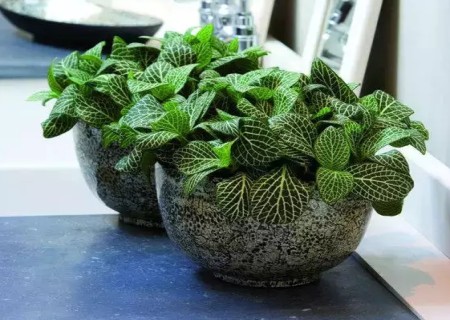
Fittonia is not only fresh and beautiful, famous the world over for its elegance and refinement, but keeping it indoors can also increase air humidity, making it truly a green, eco-friendly humidifier. While beautifying the indoor environment, Fittonia also releases a large amount of oxygen, giving a refreshing, relaxing enjoyment. With so many benefits to keeping potted Fittonia at home, how do you grow it? Below, the editor will explain the cultivation and care methods for Fittonia.
1. Light
Fittonia is a light-loving plant; as long as light conditions are sufficient and suitable, it will maintain good growth and its leaf color will be very vibrant. Although it loves light, it cannot tolerate strong direct sunlight or scorching exposure, so when the summer sun is blazing, appropriate shading measures should be taken. The recommended approach is to place the potted Fittonia in a bright spot near a window, which also makes it more convenient to manage.
2. Temperature
Besides loving light, Fittonia also likes a warm growing environment, with the most suitable growing temperature being 18-25°C. Although this plant has some shade tolerance, it is not cold-hardy; to avoid the plant suffering cold damage, it is recommended to keep its growing environment above 12°C. If the temperature drops below 8°C, the plant can easily freeze to death.
3. Humidity
Fittonia likes a moist growing environment; it not only increases indoor air humidity, but also needs relatively high air humidity during its growing period. A suitable air humidity environment provides favorable conditions for its growth, while when the air is too dry, especially in the hot, dry environment of summer, if the air humidity is insufficient, the plant is prone to poor growth. To increase the air humidity environment suitable for Fittonia's growth, we can do this by spraying water on the leaves and the ground.
4. Watering
When watering Fittonia, the potting soil must first have good drainage; if excessive watering causes water to accumulate in the pot, the plant's leaf color can easily turn whitish, and sometimes it is accompanied by leaf drop and rot. Fittonia is generally watered in the early morning or evening when temperatures are lower; during hot summer weather, the plant should also be misted frequently to raise humidity and keep the leaf color bright. In winter or during rainy weather, watering should be controlled, especially when temperatures are low and the plant has entered dormancy; watering should then be done on sunny days during the day when temperatures are higher.
5. Fertilizing
For many potted flowering plants, fertilizing should follow the principle of "light fertilizer applied frequently, small amounts but many times, complete nutrition," and the same is true for Fittonia. Besides adding an appropriate amount of fully decomposed organic fertilizer at the bottom of the pot as a base fertilizer when repotting and transplanting, it is recommended to apply a compound fertilizer once a month during the growing period, and after each fertilization, water should be given once to dissolve and dilute the fertilizer, so that it disperses more evenly in the potting soil and is absorbed more fully.
6. Repotting
Fittonia is usually propagated by cuttings to produce young plants; during the operation, avoid injuring the base of the cuttings, and also avoid direct contact with the base fertilizer, otherwise the plant can easily be burned. Once the plant has filled its original small pot, we should repot it and change the soil in a timely manner, so that the plant can grow freely in a more spacious space; otherwise, the plant will become crowded because the original pot is too small, which will not only cause intense competition among the plants in the pot, resulting in the survival of the fittest, but also seriously reduce its ornamental value. (Author: Xiaoshu 2017-09-10 23:02)