Reasons for Yellowing Leaves on Madagascar Periwinkle and Solutions
Madagascar periwinkle not only has brightly colored flowers but also a relatively long blooming period, making it a flowering plant that many people like to grow in pots. Placing it in a suitable spot indoors, such as the living room, windowsill, or study, can create a very nice decorative effect; even when potted on an outdoor balcony, it can bring a beautiful scenic touch to the balcony.
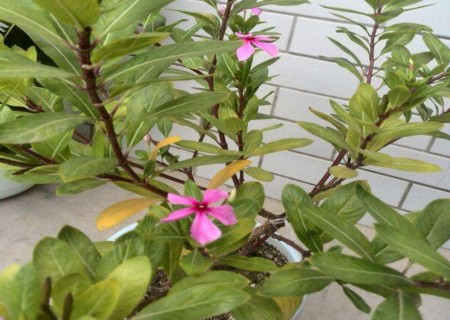
But if you want potted flowering plants to show themselves in beautiful form, care and management methods are very important, and Madagascar periwinkle is no exception. If our routine care and management are improper, it may cause the potted plant to develop yellowing leaves, which will inevitably greatly reduce its ornamental value. So, why do Madagascar periwinkle leaves turn yellow?
In fact, the causes of yellow leaves on Madagascar periwinkle are roughly the same as those for many potted flowering plants, mainly showing up in aspects such as temperature and moisture.
1. Temperature too low
If the leaves of potted Madagascar periwinkle turn yellow due to temperature, it is mainly caused by discomfort from temperatures that are too low. Madagascar periwinkle relatively prefers a warm, dry growing environment with ample light. The most suitable growing temperature in spring and summer is between 18-24°C, and the most suitable growing temperature in autumn and winter is between 13-18°C. In winter, to overwinter successfully, the ambient temperature needs to be kept above 10°C.
If the temperature is too low, we should consider providing a more suitable temperature environment for it. This problem generally does not exist in summer. In the three seasons of spring, autumn, and winter, especially in winter, sudden temperature drops are common. It is recommended that, in addition to moving the potted Madagascar periwinkle outdoors on sunny days so it can receive sufficient light, it should also be moved indoors in time for care when the temperature is too low. Whether using underfloor heating or a warm air conditioner, as long as it can provide indoor temperature protection, that is enough. Note that if using a heating air conditioner, be sure to keep the potted plant away from the air outlet.
2. Lack of water and drought stress
Although Madagascar periwinkle likes a relatively dry growing environment, it does not mean it should not be watered. If it remains in a state of water shortage and drought stress for a long time, the plant will develop yellowing leaves, and the plant may even become withered and drop leaves. Yellow leaves in this situation generally appear as yellowing from lack of water, and there is a certain difference from other yellow leaf phenomena.
In view of the yellowing caused by long-term water shortage, we should replenish water in time. But when watering, it is not advisable to water heavily or flood it, otherwise the plant will not be able to adapt all at once and more serious conditions may appear. The scientific approach is to water it gradually and little by little. It is believed that before long the yellow leaf phenomenon will disappear, and the whole plant will be full of green.
3. Substrate reasons
If the substrate used for potting Madagascar periwinkle has long-term iron deficiency or is somewhat alkaline, it may also cause the plant to develop yellowing leaves. But this kind of yellow leaf mainly appears as yellowing from deficiency characteristics or from a somewhat alkaline substrate, and there is a certain difference from other yellow leaf phenomena. However, we still need to treat it seriously, otherwise it will likewise affect the ornamental effect.
For this kind of yellow leaf phenomenon, we can apply ferrous sulfate (also known as green vitriol) to the plant. This is because properly introducing ferrous sulfate into the potting soil can neutralize the originally somewhat alkaline substrate and make the potting soil acidic, which is more suitable for the growth of Madagascar periwinkle. This is because Madagascar periwinkle itself relatively prefers an acidic substrate.
In addition, for old Madagascar periwinkle plants that have been grown in pots for many years and occasionally develop yellowing leaves and leaf drop, if the care and management measures are confirmed to be scientific and reasonable, this is a normal phenomenon of plant metabolism, and everyone need not panic. But we should heavily prune it. In addition to pruning away the yellowing old leaves, we should also control the plant height by pruning, and at the same time it can also promote the sprouting of new buds.