How to care for Acorus gramineus in winter? Master these key points for a safe overwintering
Since ancient times, Acorus gramineus has been regarded as a kind of spiritual herb with the effect of preventing epidemics and warding off evil. But at the same time, it is also a traditional flowering plant, suitable for pot cultivation and growing as a bonsai for viewing, very likable, and in recent years it has been continuously popular on the flower market. Moreover, together with narcissus, chrysanthemum and orchid, it once won the reputation of the “four elegant flowers and plants.”
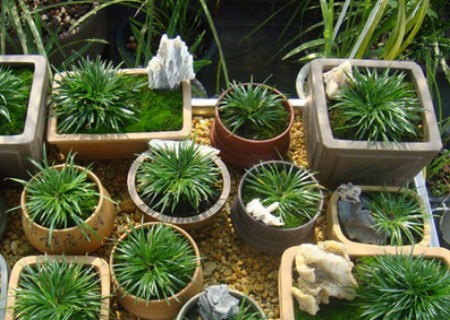
Now that we have entered deep winter, although wild Acorus gramineus has strong cold resistance, as a potted plant its cold resistance is far weaker. Especially as temperatures have continued to plummet recently, many people have begun to worry about whether their potted Acorus gramineus will suffer cold damage. If we want our Acorus gramineus not to suffer cold damage in such a cold winter, we need to master the necessary care knowledge. So, how do you care for Acorus gramineus in winter?
From the growth habits and characteristics of Acorus gramineus, we know that it relatively prefers cool, moist growing environments, has a certain cold resistance, and under normal conditions has poor drought resistance. Therefore, when growing Acorus gramineus, you must provide it with a water supply, but at the same time avoid water accumulating in the pot; just keep the potting soil in a state of being just moist. If you want to grow Acorus gramineus well, you need to provide it with a comfortable growing environment.
1. Freeze prevention and warmth
If the owner has always kept the potted Acorus gramineus outdoors for care and management, it has naturally adapted to the outdoor growing environment. Although it is winter, because Acorus gramineus has a certain cold resistance, even in a 0°C environment, with cold wind mixed with snowflakes, it still will not be frostbitten. But if ultra-low temperature weather occurs frequently as it has this year, especially in northern regions, where temperatures can even reach minus thirty or forty degrees. If we cannot provide it with cold protection and warmth measures, this will not only affect its growth, but may also cause frostbite, or even frostbite the plant. So in this situation, we need to move it indoors in time for care.
In winter, Acorus gramineus will grow slowly as temperatures drop, and the old leaves near the lower part will gradually turn yellow and withered; even new leaves will show stalled growth. In winter, the most critical part of caring for Acorus gramineus is doing a good job with warmth measures. Therefore, when facing ultra-low temperature weather, it should be moved indoors without hesitation and placed in a suitable position, while providing warmth measures as appropriate, such as turning on underfloor heating or running a hot air conditioner. But if using a hot air conditioner, avoid placing Acorus gramineus at the air outlet.
2. Watering and replenishing water
Next we need to pay attention to watering Acorus gramineus. Because indoor air with underfloor heating or hot air conditioning turned on is relatively dry, after moving the Acorus gramineus bonsai indoors, much of the water in the potting soil will evaporate. If water is not replenished in time, it is easy to cause water deficiency, affecting the plant's growth, so timely watering is especially important. When the potting soil is found to have become dry, replenish water in time and just keep the potting soil always moist; the water temperature should be about the same as the indoor air temperature. Also, the watering frequency should be more rather than less; better to let it be flooded than to let it dry out. This is because Acorus gramineus itself is not drought-resistant and fears dryness. But watering should still be moderate, avoiding water accumulation in the pot.
3. Pruning dead leaves
After entering winter, due to low temperatures and other reasons, the old leaves of Acorus gramineus easily turn yellow and withered. To avoid yellowed and withered stems and leaves falling into the pot and causing rot, or infecting other healthy leaves in good growing condition, we need to cut off all these yellowed and withered stems and leaves in time. If an entire leaf has turned yellow, we should cut it off at the base; if only part of a leaf, such as the leaf tip, has become yellow and withered, we only need to cut off the yellowed and withered part. Never blindly cut off a large number of green leaves together with yellow leaves, otherwise it may damage the rhizome of Acorus gramineus, thereby affecting the growth of the whole plant.
4. Appropriate light
Although Acorus gramineus has strong shade tolerance and also relatively prefers a shady, moist growing environment, everything in the world needs to receive light to promote photosynthesis and complete metabolism, thereby maintaining healthy growth. So even in cold winter, if it is a sunny day, we also need to provide it with light at the appropriate time. Usually, if the outdoor temperature is still ultra-low, we need to move Acorus gramineus to a place near a window so it can receive scattered light; if it has become relatively warm outdoors, we can move it at noon to the shade of a large tree outdoors so it can receive some light to promote photosynthesis.