How to remedy a bonsai ficus losing its leaves in winter
The bonsai ficus is not only pleasing to look at, but also very elegant. Many people like to grow bonsai ficus. Indeed, whether at home or in the office, the charm of the bonsai ficus is truly great and it is very popular with everyone, especially sought after by office workers. Placing a bonsai ficus on the desk will undoubtedly bring a lot of liveliness to the office.
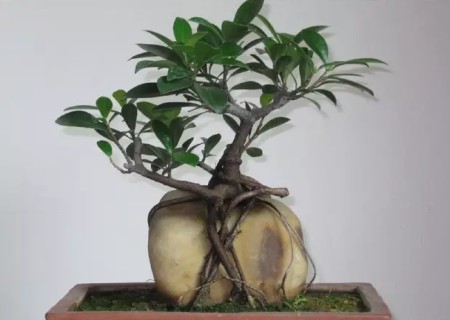
Although the bonsai ficus is nice to look at and relatively easy to care for, sometimes the owner's carelessness or inattention can lead to various undesirable problems. Recently, a fellow enthusiast discovered that the bonsai ficus on his desk kept losing its leaves. Below we will look at what he did, and then together analyze the causes so as to find reliable countermeasures.
According to this fellow enthusiast, he placed the bonsai ficus on the windowsill of the office and normally watered it once every 1-2 days. In addition, as long as he was in the office, the air conditioning was generally turned on. In fact, in the previous article "Why Does the Bonsai Ficus Lose Its Leaves", the editor already introduced in detail the common causes of leaf drop in bonsai ficus and the solutions. But the editor did not separately explain the situation of the bonsai ficus losing leaves in winter. Here, the editor will briefly analyze it based on this case.
The most common trigger for a ficus losing its leaves is overwatering, whether in hot weather or cold weather, but especially in winter. Therefore, the first thing we need to consider is the problem of improper watering. This fellow enthusiast basically watered it once every 1-2 days, but it is unknown how much water was used. Generally speaking, bonsai plants in winter do not need too much water, but considering that he often had the air conditioning on, the indoor air humidity would naturally decrease, so watering more frequently is also understandable.
Based on the above analysis, we can assume that this bonsai ficus always losing its leaves is caused by the following reasons, and then judge according to one's own actual situation.
Reason one: watering too frequently
As for whether it is reasonable to water once every 1-2 days in this environment, we can judge whether it is lack of water or overwatering by checking the dry and wet state of the potting soil. Because the ficus may lose its leaves both when it lacks water or when it is overwatered, and then we should take countermeasures according to different situations.
However, as for how to water in this environment, the recommended approach is: take out the soil from 3 cm below the surface of the potting soil to see the degree of dryness and wetness, and then properly replenish water according to the dry and wet state of the potting soil.
Reason two: unsuitable temperature
The ficus is a tree species from the south, relatively fond of sunlight, and likes to grow in an environment above 20°C. Even in winter it should not be lower than 5°C. If the temperature difference is too great in a short period, it is easy to cause leaf drop. Since it is winter, the indoor temperature is generally only a few degrees; but if the air conditioning is on, the indoor temperature generally stays between 15-20°C. So once the air conditioning is turned off, the temperature will quickly drop again. The huge temperature difference naturally makes it impossible for the bonsai ficus to adapt quickly, so leaf drop easily occurs. Therefore, regulating the temperature well is relatively important, and one must avoid too great a temperature difference in a short period.
Reason three: too little light
The ficus likes light, so it needs to be provided with sufficient light conditions. Only in this way can photosynthesis be effectively promoted and metabolism accelerated, thereby keeping its branches and leaves bright and green. Although this fellow enthusiast placed the bonsai ficus on the windowsill, it was not necessarily able to receive enough light. And when the ficus is in a light-deficient environment for a long time, leaf drop will naturally occur. If the light conditions were good, then this would naturally not be a trigger for leaf drop, and it can be ruled out here.
Reason four: the air is too dry
If the air is too dry and the humidity is insufficient, the bonsai ficus is also prone to losing its leaves. Since this fellow enthusiast often had the air conditioning on, the indoor air would naturally be relatively dry, and when the humidity is too low, leaf drop is unavoidable. Especially when the air conditioning outlet is directly facing the bonsai ficus, the leaf drop will be even more prominent. If this is the cause, we need to move the bonsai away from the air conditioning outlet and at the same time try to increase the indoor air humidity.
It can be seen that this fellow enthusiast's bonsai ficus always losing its leaves is mainly caused by the above reasons. Here, the editor suggests checking for the crux of the problem based on the above 4 aspects, and then promptly taking correct handling measures. In addition, it is also suggested to often open the windows, use the air conditioning less, ensure natural air circulation indoors, reduce stale air, appropriately increase light, and replenish water scientifically and reasonably. Especially for watering, it is advisable to water less in winter and generally keep the potting soil slightly dry.