The Correct Method and Detailed Steps for Repotting a Ficus Bonsai
Ficus bonsai generally need repotting once every 2 years, and the timing for repotting is generally set after the ficus enters dormancy, that is, the two periods of early spring or late autumn. When repotting a ficus, the potting soil should be adjusted; a suitable amount of fully decomposed organic matter can be added to the potting soil.
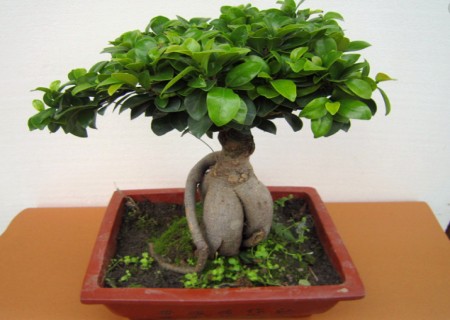
Repotting a ficus bonsai is a meticulous task. During the process, you should avoid breaking apart the root ball wrapped around the roots as much as possible, then place it in a pot one size larger, fill in the soil, water it thoroughly, and place it in a ventilated spot for a few days. Because ficus bonsai are tenacious, as long as the repotting is done properly, they adapt to the new pot very easily and are very easy to keep alive. So, specifically, how do you repot a ficus bonsai? The procedure is as follows:
1. To make it easier to remove the ficus from the original pot smoothly, it is recommended to water thoroughly once 2-3 days before repotting, so that the water soaks through the entire potting soil, especially so that the potting soil separates from the inner wall of the pot.
2. Take the ficus together with the potting soil out of the original pot, avoiding breaking apart the soil ball wrapped around the ficus root system as much as possible, so as not to affect its survival in the new pot. Then observe the state of the ficus roots penetrating out of the soil ball, and cut off any rotten or diseased roots, that is, root pruning. Then disinfect it with potassium permanganate solution.
3. Next is the potting process. First take a flower pot one size larger than the original pot, then lay a layer of broken tiles above the drainage hole at the bottom of the pot, then cover with a layer of pre-mixed new potting soil; it is best to mix in some river sand to facilitate air and water permeability. After that, transplant the ficus, with its soil ball and after root pruning and disinfection, into the new pot. The thickness of the covering soil should be moderate, and at the same time tap the pot gently so that the potting soil contacts the ficus as firmly as possible.
4. After completing the above operations, we cannot water it immediately; generally we need to wait half a day before watering, and it must be watered thoroughly. But if some roots were damaged during the potting process, watering should be delayed appropriately. And after the surface soil dries, we need to water a second time. For the first few days we need to place the ficus bonsai in a cool, ventilated spot, then gradually place it in a semi-shaded place or a place that can receive scattered light for a period of care, and only after the ficus has fully adapted to the pot can it enter the normal stage of care and management.