Detailed Guide to Growing Potted Bamboo Palm (Bambusa multiplex)
Bamboo palm (Bambusa multiplex) is mostly found in southern China, so it also prefers a warm and humid growing environment. It not only loves light but is also shade-tolerant, though it is not cold-tolerant. This matches the climate of the south quite well, so it is quite suitable for pot cultivation in southern China. However, its soil requirements remain fertile, loose, well-aerated and highly permeable. Today, the editor will share with you the growing methods for potted bamboo palm.
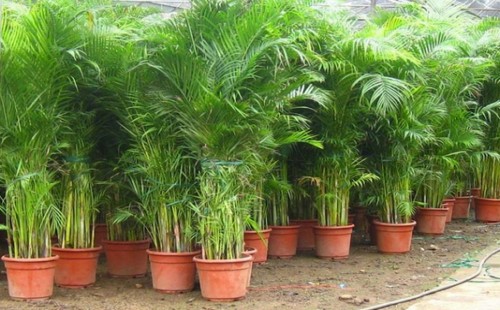
Under normal growth conditions, potted bamboo palm tends to have a larger plant form compared with other potted flowering plants, so it is generally grown as a medium-to-large potted plant. Moreover, to maintain a good plant shape, the care and management efforts required are often greater than those for ordinary flowering plants. Let's take a look at what aspects of care and management need to be done well.
I. Potting soil
For bamboo palm, the potting soil should be fertile, loose, well-aerated and permeable. If some humus-rich leaf mold can be added to the potting soil, the growth results will be even better. Usually, a mix of leaf mold, garden soil and sand is used. When potting, it is also advisable to bury some decomposed cake fertilizer in the pot as a base fertilizer, which is more conducive to promoting root growth and development, and also promotes leaf sprouting.
II. Light
Although bamboo palm is fairly shade-tolerant, it also likes ample light and usually prefers soft light, so it is quite suitable whether placed indoors or grown outdoors in a pot. If the light is relatively intense, appropriate shading measures should be taken to avoid sunburn on the branches and leaves, especially in the hot summer, and prolonged exposure to strong light can easily cause yellowing of the leaves.
III. Temperature
Bamboo palm likes to grow in a temperature environment of around 20°C. It prefers warmth but is not cold-tolerant. Apart from needing measures to keep it warm and protect it from the cold when winter temperatures are too low, it generally does not need special care, because the other seasons are usually quite suitable for growth. However, we still need to pay attention to temperature management in the growing environment, because when the ambient temperature is below 0°C, frost damage can easily occur. Therefore, to ensure it overwinters successfully, the ambient temperature should be kept above 0°C.
IV. Watering
Bamboo palm has poor water tolerance, so watering should not be excessive, and even more so, water should not accumulate in the pot. During the growing season, the potting soil should be kept moist, so moderate watering is sufficient. Generally, when the potting soil becomes half-dry, it should be watered promptly. In summer, because the weather is hot and temperatures are high, water evaporation and consumption are relatively large, so watering should be appropriately increased, but more spraying should be maintained to cool and moisturize. In autumn and winter, the water requirement is relatively small, so it should be strictly controlled. Usually, watering once every 4-5 days or even once a week is fine.
V. Fertilizing
Bamboo palm has a larger plant form than ordinary potted flowering plants, so to meet the growth needs of its large form, it usually also needs appropriate fertilizing to supplement nutrients. In addition to using barnyard manure, bone meal and cake fertilizer as base fertilizer when potting, during the growing season some quick-acting fertilizers such as urea and monopotassium phosphate can also be appropriately applied by watering them into the pot. About every 3 weeks, a thin compound fertilizer can also be applied as a top dressing, which is more conducive to promoting the plant's green growth. Usually, do a good job of loosening the soil, especially in early winter each year, applying some chemical fertilizer or miscellaneous manure to improve the soil and promote the growth and development of the root system.
VI. Pests and diseases
The main diseases of bamboo palm are rust and leaf blight; the main pests are aphids and wireworms. If it is infected with rust, zineb wettable powder can be diluted with water and sprayed to control it; if it is infected with leaf blight, thiophanate-methyl wettable powder can be diluted with water and sprayed to control it; if it is harmed by aphids, dichlorvos can be diluted with water and sprayed to control them; if it is harmed by wireworms, phoxim can be diluted with water and poured at the roots to kill them.