What to Do When the Leaves and Branches of a Potted Buddha Belly Bamboo Turn Yellow and Withered? A Full Guide to Prevention and Treatment
In the previous article, we introduced how improper care and management can easily cause the leaves and branches of potted Buddha Belly Bamboo to turn yellow and withered. To prevent this yellowing and withering of the leaves and branches, today we'd like to share the relevant prevention and treatment measures. So, how do you prevent and treat yellowing and withered leaves and branches in potted Buddha Belly Bamboo? Let's take a look together below!
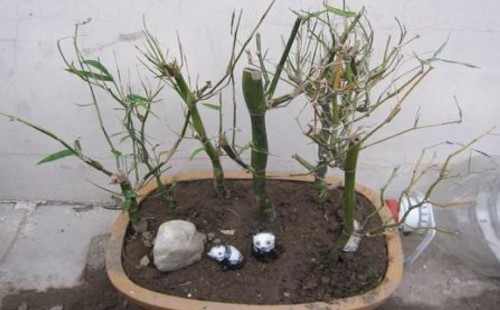
When an environment that was originally suitable for Buddha Belly Bamboo's growth is no longer suitable, poor growth such as yellowing and withered leaves and branches will occur, especially in the peak of summer. Clearly, the day-to-day care and management of potted Buddha Belly Bamboo often needs to be flexibly adjusted according to the different seasons, because the care and management work is often not the same in different seasons. So, to prevent potted Buddha Belly Bamboo from developing yellowing and withered leaves and branches, we can generally follow the care methods below to manage it scientifically and sensibly.
1. The soil used for potted Buddha Belly Bamboo should be kept fertile, loose, and permeable to both air and water, while also having a certain ability to retain water and nutrients. For growing it as a household potted plant, you can mix mountain soil with organic fertilizer such as livestock and poultry manure, compost the mixture, and then add it to the potting soil for use.
2. As a type of bamboo, Buddha Belly Bamboo has very well-developed roots, and once it grows into a mature plant it will generally easily fill the bottom of the pot. Therefore, repotting and root pruning is a necessary job. Usually, after pruning the roots you repot it into a pot one size larger and cover it with fresh potting soil. During this process, you especially need to cut away the overly dense fibrous roots and the old, weak, diseased, or pest-damaged root nodes, so as to encourage the plant to sprout new roots, which leads to better growth and also helps it produce new shoots.
3. Summer is a rather hard season for potted Buddha Belly Bamboo, especially in the peak of summer. During this period, besides increasing watering, you also need to spray water more often to retain moisture and lower the temperature. When the air humidity is suitable, the plant can carry out normal water transfer and exchange, thereby ensuring the plant keeps its leaves green and vigorous. In particular, avoid the scorching sun in summer, as the plant will often develop yellowing and withered leaves and branches because its water supply cannot keep up. Therefore, proper shading is very necessary to protect the plant.
4. Generally, May to September is the peak period for the plant to be infected by pests and diseases, because temperatures tend to remain fairly high during this time; if the plant is in a hot, humid, and poorly ventilated environment, it easily breeds pests and diseases. Once discovered, they must be eliminated promptly. If Buddha Belly Bamboo develops yellowing and withered leaves and branches, it is generally very difficult to get it to turn green again, so we need to cut off the yellowed parts of the leaves, usually keeping only the petiole and the base of the leaf blade.
If it can be managed scientifically later on, with good watering and fertilizing, it will usually sprout new buds and put out new leaves in just over 1 month. Older leaves may even turn green again, and at that point the ornamental value of the potted plant will gradually improve.