What to Do When Potted Bamboo Palm Leaves Turn Yellow? Causes and Solutions
As a foliage-type ornamental landscape plant, potted bamboo palm (Bambusa multiplex) likes light but also tolerates shade. It can be placed not only in indoor living rooms, hallways and similar spots, but also in public spaces such as offices, and it usually delivers a nice beautifying effect on the environment. Staying green year-round is its greatest ornamental highlight, so under today's green-living philosophy, we especially need to keep it as green as possible.
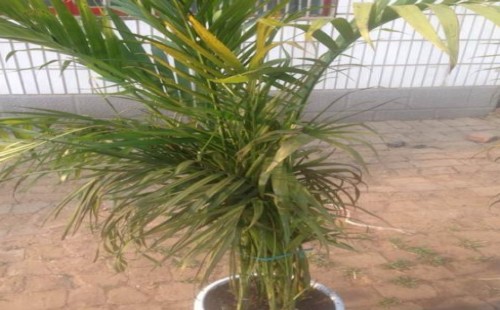
Adding a touch of fresh green to an indoor environment not only brings a pleasant feeling, letting people work happily and live relaxed in a cheerful setting, but also freshens the indoor air a little. That is why daily care and management need to be done well so the plant stays evergreen. If care and management are not done well enough, the bamboo palm may develop yellow leaves when the environment does not suit it. So, what should you do when a potted bamboo palm's leaves turn yellow?
As a potted green plant, yellowing leaves are fairly common and are usually caused by improper care and management. So we need to start by checking our daily care and management practices, find the cause of the problem, and then apply targeted remedies, so we can recover the loss as quickly as possible. Regarding yellowing leaves on potted bamboo palm, we have summarized some common causes and their solutions, hoping they will help you.
1. Too much light
Although the bamboo palm quite likes receiving plenty of light, especially in winter, it is rather afraid of prolonged direct exposure to strong sunlight, especially the scorching sun of summer; otherwise it will get scorched and burnt, and in that case the leaves turn yellow from losing too much water. In this situation, the pot should be moved immediately to a shady spot or other shading measures should be taken for it.
2. Lack of light
Opposite to too much light, if the potted bamboo palm is kept for a long time in a rather shaded indoor environment, it may also fail to carry out normal photosynthesis because it cannot get reasonable light for a long time, and thus develop yellow leaves. In this case, we should gradually increase light for it to promote photosynthesis, and shade it appropriately when the light is too strong; this lets the plant slowly return to normal growth and turn green again.
3. Overwatering
If a potted bamboo palm is watered too much, or the pot drains poorly, water may accumulate in the pot or the soil may become too wet, causing leaves to turn yellow from excess water. The main sign is that the newly sprouted tender leaves are rather weak, yellowish and slow-growing. So we need to drain the water immediately, improve ventilation, and at the same time loosen the soil and clear drainage channels, so the excess water in the pot can quickly evaporate or drain away.
4. Long-term lack of water
When a potted bamboo palm gets no water replenishment for a long time, the soil becomes too dry, the leaf tips turn yellow, and leaf drop occurs at the same time. In this case, we only need to water it in time. But when watering, note that you must not suddenly give a heavy watering after a long dry spell; otherwise it will not only fail to improve the yellowing and leaf drop, but may also cause more growth problems. So watering immediately is also a gradual process.
5. Overfertilizing
Overfertilizing causes the potted bamboo palm's leaves to turn yellow and lose their gloss, mostly showing as fertilizer-induced yellowing. It is usually caused by too high a fertilizer concentration or too strong a fertilizer effect that burns the roots. Therefore, we need to water thoroughly in time to dilute the fertilizer in the soil and let it drain out through the drainage hole at the bottom of the pot. At the same time, improve ventilation to avoid the soil staying too wet.
6. Lack of nutrients
When a potted bamboo palm cannot get enough nutrients to sustain growth for a long time, its leaves often turn yellow from nutrient deficiency, mainly with the tender leaves turning pale yellow. So we need to feed it appropriately by topdressing with the nutrients necessary for normal growth. But when fertilizing, never use too high a concentration, otherwise it will cause fertilizer damage and fertilizer-induced yellowing of the leaves, worsening the yellow-leaf problem.
For most potted flowering and foliage plants, when yellowing leaves appear, it is generally caused by the 6 reasons above. Potted bamboo palm is no exception; as long as you check according to these 6 points, find the cause and take the corresponding measures in time, the situation will often improve and may even be eliminated promptly.