What are the reasons a Canna does not bloom?
Canna prefers a warm and humid growing environment, and as long as water and fertilizer are supplied in time, it not only grows with luxuriant branches and leaves and showy flower spikes, but also greatly improves its ornamental value when grown as a potted plant. And the flowers of Canna are not only rich in color and brilliant in hue, but also very large and captivating.
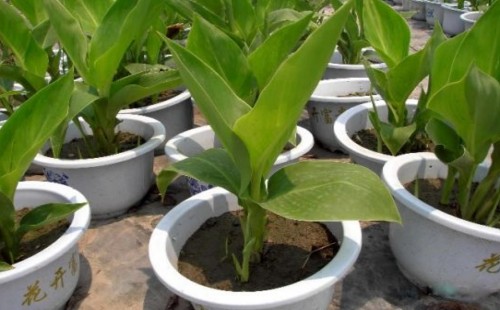
In daily life, many people like Canna, and Canna is also used quite widely; it can not only be cultivated as a landscape plant, but also grown as a potted plant. Whether used for landscaping or as a home potted plant, it often has extremely high ornamental value and is deeply cherished by people. But if Canna does not bloom, does its charm still remain?
We can imagine that only when the large branches and leaves of Canna are paired with large flowers can it be considered truly exquisite. If it only grows leaves without blooming, then no matter how luxuriant the branches and leaves grow, if it does not bloom for a long time, whether as a landscape application or a home potted plant, it will lose its luster and the ornamental effect will be greatly reduced. So, why does Canna not bloom?
In fact, when Canna does not bloom, it is usually caused by improper care and management. Based on Canna's preference for a warm and humid growing environment and its habits of liking light, water, and fertilizer, we can investigate from these aspects. Because only when these conditions are met will Canna bloom in abundance.
1. Lack of light
Canna is a light-loving plant. In addition to evaporating a large amount of water, its large leaves also have a prominent advantage, which is a very large area for receiving light. And the large leaf area can ensure the plant can better promote photosynthesis, thereby ensuring that it maintains good growth. However, if Canna is placed in a relatively shady environment for a long time, because it does not receive effective photosynthesis in time, it is prone to the phenomenon of leggy branches and leaves without blooming. Therefore, we need to provide it with sufficient light in time, and usually the more sufficient the light, the higher the flowering quality.
2. Temperature too low
Canna has the characteristic of tolerating heat but not cold. Usually, the higher the temperature, the more it likes it, and the more brilliantly it blooms. Canna also has a very long flowering period, generally blooming continuously from March of that year to December, especially in December in winter; if the temperature is too low, it may lead to the phenomenon of not blooming. Therefore, to ensure it can bloom smoothly, it can be placed indoors near a window in a bright, sunny spot, while adjusting the temperature well, and it is best to make it suitable for blooming.
3. Improper watering
Canna prefers a humid growing environment, so watering management needs to be done in time during normal care to avoid water deficiency, because Canna has relatively poor drought tolerance. If the water deficiency is severe, the plant will lack the water needed for blooming, so it will be difficult for it to bloom. Even if it blooms, the quantity will be small and the quality low. Therefore, when growing Canna, since it has the characteristic of liking moisture, we must manage water in time. Of course, if excessive watering keeps the plant in a waterlogged state for a long time, root rot is likely to occur. Not to mention not blooming, it would be good if it does not die.
4. Improper fertilizing
In addition to liking moisture, Canna also relatively likes fertilizer, especially during the flowering period, when it needs to consume a large amount of nutrients. But fertilizer should not be applied during the flowering period. Appropriate topdressing can be done before and after flowering, especially before flowering; through reasonable topdressing, the plant can store a large amount of nutrients, which lays a solid foundation for blooming. And after flowering, the spent flowers also need to be cut off in time, and reasonable topdressing should be carried out again, which can ensure another bloom after 1-2 months. However, if the plant lacks nutrients and is not topdressed in time, then under the condition of insufficient nutrients, it will be difficult for the plant to bloom. Of course, if too much fertilizer is applied, it will also cause fertilizer burn and root rot, which can likewise cause poor growth of the plant. Even if it does not die, it may also show wilting branches and leaves and no blooming. Therefore, fertilizing must be scientific and reasonable.