A Detailed Explanation of the Blooming Period of the Cane Begonia and the Reasons It Does Not Bloom
The cane begonia (Begonia maculata) belongs to the begonia family. Its flowers are small and exquisite, delicate and bright red, and very endearing, so many plant lovers like to grow it as a houseplant in pots. The cane begonia is a shallow-rooted species, generally propagated from young plants by cuttings. With proper growing methods, you can usually see its flowers in summer and autumn.
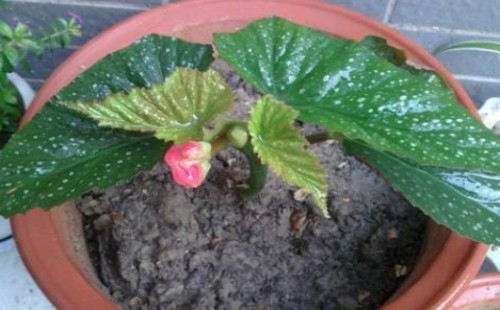
But if the blooming period arrives and the cane begonia still shows no flowers, that is bound to be rather disappointing. So we cannot help but wonder why the cane begonia does not bloom, and what to do if it does not bloom. Today, we will share with you some knowledge about potted cane begonias that do not bloom.
First, we need to be clear about which season the cane begonia normally blooms in. From the above, we have already told you that the cane begonia's blooming period is concentrated in summer and autumn. As for why it does not bloom, it is usually because improper care and management on our part has created an unsuitable growing environment for the begonia, resulting in a failure to bloom. This is mainly shown in the following aspects:
1. Improper lighting
The cane begonia prefers a cool, shady growing environment. In summer, direct sunlight needs to be reduced, and especially intense sun exposure must be avoided; otherwise the branches and leaves will turn yellow, the flower quality will be poor, and it may even fail to bloom. In the other three seasons, it needs to be given plenty of light to promote photosynthesis, thereby promoting flower bud formation and blooming. If the light is too dim or insufficient, it may also cause the begonia not to bloom.
2. Improper temperature
The cane begonia likes to grow in a cool and humid environment. Its cold tolerance is rather poor, and it also dislikes intense sun exposure. The most suitable growing temperature is between 15°C-25°C. If the temperature reaches either extreme, high or low, it will often fail to bloom because the growing environment's temperature is unsuitable.
3. Improper watering
The cane begonia can only grow normally when the potting soil has a certain degree of moisture. Although it is fairly drought-tolerant, it should not be kept too dry for a long time; at the same time, it should not be watered too much, which would make the potting soil too wet or waterlogged. Potting soil that is too dry or too wet can both cause reduced blooming or no blooming at all. This is because when there is a lack of water, the plant may not have enough nutrients to complete blooming; while too much watering may cause root rot, which can also result in no blooming.
4. Improper fertilizing
Fertilizing for flowering plants should be done at low concentration and in diluted form, but they should not go without additional fertilizer for a long time either. This is because the begonia also needs enough nutrients to maintain its growth, and especially during the blooming period it consumes a large amount of nutrients to support blooming. But if the fertilizer concentration is too high and the fertilizer effect is too strong, it may burn the begonia's roots, causing root rot and affecting or inhibiting blooming.
5. Improper pruning
Reasonable pruning of potted flowering plants can not only promote the sprouting of new branches and let them grow more flowering branches, increasing the number of blooms, but if pruned too deeply, it may seriously damage the plant's vigor, thereby inhibiting or hindering blooming. However, if the branches are not pruned for a long time, it may also cause the plant to grow only branches and leaves without blooming. Therefore, pruning is not only a means of maintaining a good tree shape, but also a measure to promote sprouting and blooming.
6. Pests and diseases
The cane begonia can also be infected by pests and diseases, especially in the hot and humid growing environment of summer, so potted begonias also need to be provided with good ventilation and light transmission. This can greatly reduce the occurrence of pests and diseases, especially in a hot and humid environment. However, once pests or diseases occur, we also need to apply pesticide promptly to spray and kill them, avoiding the spread of infection. This is because when pests and diseases attack severely, they can easily cause flowers to drop, leaves to fall, and even a failure to bloom.
It can be seen that to ensure potted cane begonias bloom smoothly and on schedule, we must apply scientific and reasonable care methods in daily management. Not only must light and temperature be well controlled, but water and fertilizer must also be scientific, pruning must be reasonable, and pest and disease control is indispensable as well. Only in this way can we create a good environment suitable for the cane begonia's growth and blooming.