Reasons and solutions for indoor winter jasmine not blooming
Many gardening friends like to place potted winter jasmine or winter jasmine bonsai indoors for viewing. However, the best viewing period for winter jasmine is often during its blooming season, and once it fails to bloom during that season, it is inevitably a disappointing thing, especially in an indoor care environment. So, what should be done when indoor winter jasmine does not bloom?
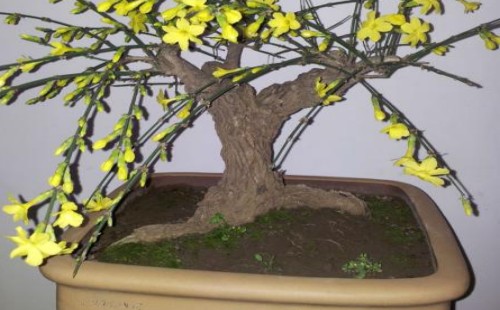
Under normal circumstances, winter jasmine needs 3-4 years to grow from the seedling stage to a mature plant and successfully produce flowers. This is a rather long time. If we have enough patience and use proper care methods later on, we can believe that we will be able to enjoy the day when winter jasmine blooms on schedule. However, sometimes it is precisely because the care work is not done properly that blooming is never seen.
The main reasons for indoor winter jasmine not blooming are lack of light and unsuitable temperature. Because the blooming period of winter jasmine is usually from February to April, in order to ensure that it can bloom normally, light and ambient temperature often play a decisive role. To encourage the plant to bloom, in winter the pot can be placed in a warmer indoor area, and the location needs to face the sun with good light; receiving sufficient light is very important.
If the pot is placed in a sunny indoor spot, the temperature is raised to about 13°C, and at the same time clean water is sprayed on the plant 1-2 times a day, it usually takes about 3 weeks for blooming to appear; if the indoor temperature is adjusted to about 20°C, blooming usually appears in a little over 1 week; and during the blooming period, the room temperature should be kept at about 8°C. Too high or too low a temperature is unsuitable, especially when the temperature is too high, which often shortens the blooming period.
It can be seen that temperature management in the winter growing environment of winter jasmine is very important, because temperature often determines whether the plant can successfully overwinter, determines the quality of blooming, and determines the length of the blooming period. Therefore, we need to carry out temperature regulation in a timely manner, and it must be done according to the requirements suitable for its growth and blooming. Otherwise, having it bloom indoors on schedule will be empty talk.
In addition, our other care and management methods also need to keep up. Although other care methods may not be the direct factor in achieving blooming, they often provide basic guarantees for blooming. This is mainly shown in several aspects such as potting soil, water and fertilizer, and pruning. Everyone only needs to manage according to standard practices.