What are the care methods for Bougainvillea after flowering
Bougainvillea is known as the city flower of Xiamen, the provincial flower of Hainan, and the national flower of Zambia, which shows its importance in people's hearts. Indeed, Bougainvillea is very gorgeous when in bloom, and its branches full of flowers make it endearing, so it is deeply sought after by people. Moreover, Bougainvillea has a very long flowering period, and with scientific care and management, it can bloom in all four seasons, especially the post-flowering care and management. If done well, it can lay a good foundation for the next round of flowering. So, how should Bougainvillea be cared for after flowering?
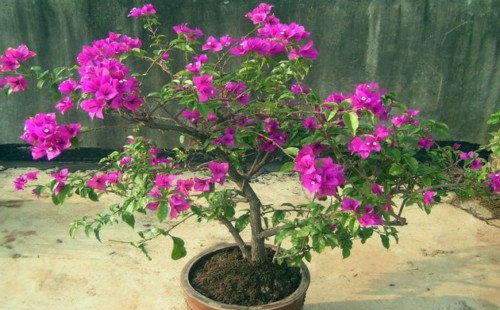
Experienced veterans who like growing flowers and plants in pots naturally know that doing a good job of post-flowering care and management will play a crucial role in the next round of flowering. The same is true for Bougainvillea. Each time you do a good job of post-flowering care and management, you can let the next round of flowering bloom as scheduled, and also extend the flowering period, thereby achieving the goal of blooming in all four seasons. Below, the editor will introduce to you how potted Bougainvillea is managed after flowering.
1. Sufficient light
Bougainvillea relatively prefers sunlight. If it does not get sufficient light during its growth after flowering, the plant's growth may become weaker, thereby affecting the next round of flowering. Especially in winter, potted Bougainvillea needs to be placed in a bright place with sufficient light. Especially on sunny days in winter, it is necessary to provide it with as much sufficient light time as possible, more than 8 hours per day, otherwise the plant is prone to leaf drop.
2. Suitable temperature
The optimal growth temperature for Bougainvillea is between 20-30°C, so we should create a suitable temperature environment for it as much as possible. Otherwise, if the growing environment temperature is too low, it is also quite prone to leaf drop. Especially in winter when the temperature drops below 5°C, cold damage is often more obvious, and leaf drop is more prominent, posing a greater challenge to successfully overwintering.
3. Pruning after flowering
Because Bougainvillea consumes a large amount of nutrients during the flowering period, and is also accompanied by falling flowers and leaves, it is necessary to prune and shape it in time after flowering. While creating a good shape, it can also save some nutrients, avoid affecting the plant's appearance due to a messy shape, and also avoid excessive nutrient consumption that weakens the tree's vigor. Therefore, reasonable pruning can allow the plant to smoothly recover its strength.
From July to August each year, pinching should be done frequently to control the plant shape, promote flower bud formation, and make flowering more vigorous and colorful. For old plants with a tree age of 5-6 years, branches need to be cut back in time, or the plant should be heavily pruned once to promote the sprouting of new branches and achieve the purpose of renewing branches and leaves, thereby keeping the plant's branches and leaves lush and fresh green.
At the same time, shaping management also needs to be done as opportunities arise. Usually, pruning methods are used to achieve a rounded crown, and binding methods are used to make the branch distribution more reasonable, making the plant shape appear fuller and more regular. Scientific and reasonable pruning treatment can also be combined with repotting, mainly cutting off overly dense branches, dead branches and fallen leaves, and diseased, weak, and old branches. This can stimulate the plant to sprout new branches and maintain growth vitality.
4. Topdressing after flowering
After this round of Bougainvillea flowering fades in spring, what follows is the vegetative growth period of Bougainvillea. In order to help the plant quickly recover its growth, after removing the spent flowers and cutting off the flowering branches, although some nutrients can be saved, timely topdressing is also needed to increase nutrient intake and storage. You can keep applying a dilute urea fertilizer once a week, so that after flowering the plant has sufficient nutrients to maintain growth, and will not enter a state of stagnant growth due to lack of nutrients after consuming a large amount of nutrients during the flowering period.
In this case, as long as sufficient nutrient supply is prepared for the plant, the plant will gradually recover from a state of greatly damaged vitality, and can also sprout more new branches, especially new branches, laying a good foundation for the next round of flowering.