How to grow a papaya bonsai? A detailed guide to practical care techniques
Papaya bonsai not only has extremely high ornamental value but also great edible value, so turning papaya into a potted plant makes it both beautiful and practical. Therefore, once we have a papaya bonsai, the care and management work must be done well to ensure the bonsai's beauty is lasting. So how do you care for a papaya bonsai? To help bonsai enthusiasts manage their own papaya bonsai well, today the editor will share with you the care techniques for papaya bonsai.
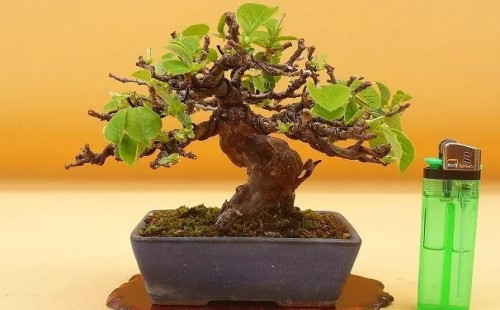
Transplanting and establishing young papaya seedlings is usually carried out in spring, and transplanting in early spring gives a higher survival rate. But when transplanting into pots, it is best to move them with the soil ball, and the roots also need appropriate trimming, mainly shortening the main root while keeping as many lateral roots and fibrous roots as possible. When potting, it is recommended to bury enough decomposed cake fertilizer in the pot bottom as base fertilizer, and after successful establishment and stable growth, move it outdoors to a spot with plenty of light for management. Plants in the growing period need the potting soil kept moist often to promote growth, but at the same time waterlogging in the pot must be avoided, especially on rainy days when drainage and waterlogging prevention measures should be done well.
In early April of spring, to ensure the plant can maintain normal growth, timely topdressing is usually needed. After all, when grown as a potted plant, the amount of soil in the pot is subject to certain limits, and nutrients are also more limited, so timely topdressing is needed. At the beginning, a suitable amount of diluted potassium dihydrogen phosphate solution can be sprayed, with the concentration best kept at about 0.2%. By reasonably applying foliar fertilizer, it can effectively promote bud formation, make the flower buds grow more robust and plump, and at the same time store enough nutrients for later fruit set.
At the same time, because of the limited capacity in the pot, nutrients are very limited, and the number of fruits set should not be too many, otherwise there will not be enough nutrients to support fruit formation and enlargement, seriously reducing fruit quality. Usually, keeping 3-5 fruits on each potted papaya tree is enough, and the rest of the fruits should be removed in time. This is mainly to avoid too many fruits hanging on the tree, which spreads the limited nutrients too thinly, thereby weakening the tree's vigor and in turn being unfavorable to fruit growth and ripening.
Of course, it is also recommended to apply a thin alum fertilizer water once a month to prevent the potting soil from becoming alkaline, because papaya prefers to grow in a slightly acidic soil environment. Another effect of applying some alum fertilizer water is to improve fruit quality, making the fruit grow more robust and also taste better. But be sure to avoid applying fertilizer at high concentration or raw fertilizer, otherwise it will not only be unfavorable to the papaya tree's flowering and fruiting, but may also cause fertilizer burn, root rot, and seriously affect the plant's growth.
At the same time, in the process of caring for and managing a papaya bonsai, we also need to take the bonsai's ornamental quality into account, so during care, timely pinching and repeated pinching should be carried out to ensure the plant can maintain a good plant shape and at the same time enhance the bonsai's ornamental value. In winter, during the leaf-falling season, we also need to carry out reasonable pruning and shaping of the papaya tree, mainly cutting off weaker thin branches, dead branches and other branches that affect the beauty of the shape. At the same time, keep more robust branches with good growth to promote later flowering and fruiting.
Papaya is a fruit tree with relatively strong cold resistance, so in winter it can be placed outdoors for care and management, but it is recommended to place it in a sunny, wind-sheltered spot to ensure no frost damage occurs and it overwinters smoothly. But if the outdoor temperature is too low, especially in areas close to the north, it is recommended to bury the flower pot in the ground, or it can be moved indoors. As long as the indoor temperature can be kept above 0°C, it can generally overwinter safely.
But the indoor temperature should not be too high either; it is best kept below 10°C, otherwise the papaya tree is prone to sprouting early and causing poor growth the following year. For a papaya bonsai placed indoors, it is enough as long as the indoor temperature can be kept between 0°C-10°C. This is because within this temperature range, the plant usually enters dormancy and will not suffer frost damage, creating good conditions for the papaya tree to overwinter smoothly.
In addition, during the care and management of a papaya bonsai, after usually 1-2 years of growing it, repotting should be done in time to improve the looseness and permeability of the potting soil, improve the penetration capacity after watering and fertilizing, and improve the utilization rate of nutrients. Repotting work is best carried out each spring, with early spring giving the best results. The repotting process is similar to the process of potting and transplanting young seedlings, so it will not be repeated here.