Reasons Why a Selaginella Bonsai Wilts and How to Fix It
Selaginella, also known as the resurrection plant, is a resurrection-type plant suited to growing in soil or on rocks, usually forming a cushion-like shape, and it mainly reproduces by spores. It also has strong drought tolerance; when dry, its roots can separate from the soil and appear curled up, while when sufficient moisture is available, its roots will burrow back into the potting soil to draw up water.
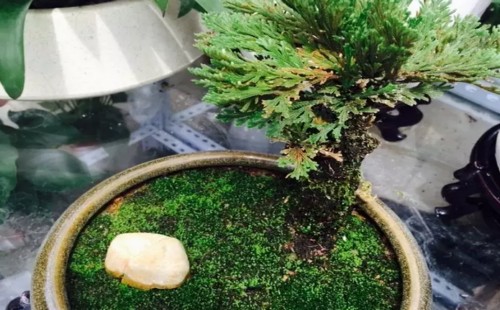
Selaginella is very well suited to being made into a bonsai for viewing. Although its routine care and management are very simple, it still needs to be treated with care, otherwise the plant can easily show poor growth. The most common symptom in this plant is wilting. So, what should you do when a Selaginella bonsai wilts?
In fact, Selaginella is quite prone to wilting, usually due to a lack of water. This is because Selaginella prefers a moist and semi-shaded growing environment, and although it has strong drought tolerance, if it is short of water, the plant can easily wilt.
As described above, when suffering from drought, its roots curl up, but this does not affect the plant's survival at this point, since Selaginella has very strong drought tolerance. In this case, if you water it in time, the plant will quickly recover from the wilted state. This is because after watering, the roots that curled up out of the soil surface during drought will extend back into the potting soil to draw up water.
Once its roots can freely draw up water, the water is quickly transported to the stems and leaves, restoring normal nutrient and water transport functions, and letting the plant quickly regain its growth vitality. So once Selaginella suffers from drought, its branches and leaves shrink and its roots curl into a ball, but when water is available, it returns to a normal growing state, full of vitality, and the bonsai's ornamental appeal is restored.
It is clear that a wilting Selaginella bonsai is mainly caused by a lack of water. Therefore, usually avoid direct sunlight to reduce water evaporation, and water in time as well, especially during the growing season; when there is enough water, the plant can be kept at normal growth vitality and looks more ornamental. Of course, you also need to keep it well ventilated and avoid a hot, humid, stuffy environment, otherwise it is prone to pests and diseases.