What are the reasons why bougainvillea does not bloom?
Bougainvillea has rich flower colors and brilliant blooms, with extremely high ornamental value, so many gardening enthusiasts like to grow it in pots at home for enjoyment. However, if a potted bougainvillea fails to bloom, it is inevitably a great disappointment. So what is going on when bougainvillea does not bloom? Today, the editor will talk about the reasons why bougainvillea does not bloom, and also offer some tips for everyone.
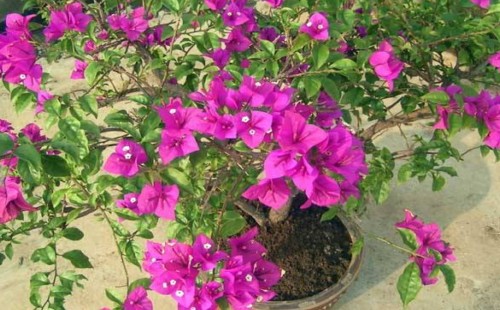
Through practical experience in potting and growing bougainvillea, it has been found that phenomena such as failure to bloom, few flowers, and dull flower colors are mainly caused by an unsuitable growing environment, and the reasons for the damaged growing environment are generally problems with light, water and fertilizer. So, in response to the above phenomena, we should first start investigating from these three aspects.
1. Lack of light
Bougainvillea is a plant that relatively likes light, especially during the flowering period. The more sufficient the light, the more it tends to show a charming scene of abundant and brightly colored blooms. After all, bougainvillea is a sun-loving flowering plant, and besides needing sufficient light during the growing period to accelerate photosynthesis and promote growth, this is even more true during the flowering period.
Under normal circumstances, the more sufficient the light, the more vigorous the plant growth, and the more splendid and brilliant the blooming; on the contrary, if the potted bougainvillea is placed in a relatively shady and light-deficient place for a long time, the plant will fail to receive light in time and cannot effectively carry out photosynthesis, resulting in few flowers or even no flowers. Therefore, for this adverse phenomenon, we only need to continuously increase light for it. As long as it is not exposed to the scorching sun in summer, it can often be given full sun.
2. Improper water control
Many potted flowering plants need timely water control before entering the flowering period, mainly to promote the formation and differentiation of flower buds on flowering branches, thereby ensuring normal blooming. The same is true for bougainvillea. If water control is not timely and watering continues according to daily care and management methods, or if it is frequently watered heavily, it may not only make it difficult for the plant to promote flower bud differentiation, but even if a small number of flowers can bloom, they are prone to early dropping.
The degree of flower bud differentiation in bougainvillea is largely affected by watering. Generally, water control should be carried out in time more than 1 month before flowering; especially on heavy rainy days, the pot should be moved to a rain-sheltered place in time for care, to prevent excessive water in the pot and excessive humidity from affecting later flower setting. Water control for bougainvillea generally lasts more than 1 week, after which normal watering can be resumed to ensure that there is enough water during the flowering period to support blooming and the sprouting of new branches and leaves. Therefore, the water control work before the flowering period of bougainvillea must be done well; this is a necessary measure to ensure that it blooms on schedule.
3. Insufficient nutrients
Because bougainvillea blooms profusely, it consumes a very large amount of nutrients during this period. If the nutrient reserves in the earlier stage are insufficient, it will inevitably affect or inhibit the formation and differentiation of flower buds, resulting in no blooming or few flowers. Therefore, preparing sufficient nutrients for bougainvillea during the growing period is crucial for its later blooming. After all, bougainvillea is a woody flowering plant with a high demand for nutrients, so fertilizer should be applied in time during normal care to supplement nutrients.
For fertilizing potted bougainvillea, it generally needs to be determined according to the size of the pot and the amount of soil, as well as the plant's growth stage and growth state. Generally, topdressing can be maintained once a month, and during the peak growing season it can be maintained once every half month, with a thin liquid fertilizer relatively high in phosphorus and potassium being suitable. Scientific topdressing can effectively promote the formation and differentiation of bougainvillea flower buds, thereby providing assurance for blooming. Therefore, we should scientifically and timely apply topdressing to bougainvillea in normal care.