How to Grow Buddhist Pine? Learn the Correct Care Methods
Buddhist pine (Podocarpus macrophyllus) is a fairly common bonsai material, and its elegant figure is often seen in home life. It is also a very popular bonsai tree species. Moreover, Buddhist pine has a very auspicious meaning in our traditional culture, often symbolizing longevity and wealth, and among the people there has long been a saying that “a family with a Buddhist pine will never suffer poverty for generations.”
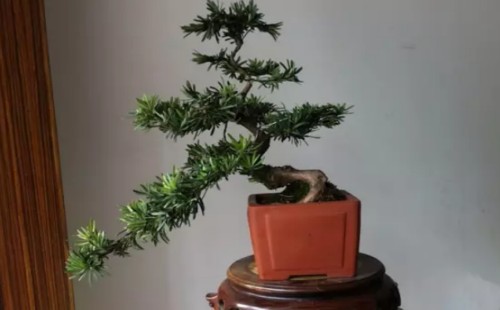
At the same time, as a high-quality bonsai material, Buddhist pine also has the characteristics of being lush in all four seasons, graceful in posture, and highly ornamental. However, its wild numbers are not large, and even though its market price is often on the high side, many bonsai enthusiasts still spend heavily to buy it. In general, the older the Buddhist pine tree, the higher its price tends to be, and the factors determining whether the price is high or low are not only the length of the tree's age; whether it is easy to shape often also plays a decisive role. So, how do you grow Buddhist pine?
To grow Buddhist pine well, we should usually check whether the configuration of the flowerpot is scientific and whether the soil mix is reasonable. Generally, use a flowerpot with good permeability, a suitable size, and a texture that favors drainage and air flow; for the potting soil, a sandy loam that is loose, breathable, and strongly permeable to water is preferable. This is because if the soil quality is too poor, especially if permeability is bad, then once too much water is given, it cannot be drained out of the pot in time, and the humidity inside the pot becomes too high, which easily causes root suffocation and root rot. This is very unfavorable for the growth of Buddhist pine.
For Buddhist pine grown as a household potted plant or made into a bonsai, the placement location is very important. It should be placed outdoors in a well-ventilated spot for care and management. If it is placed indoors lacking light for a long time, it often easily causes yellowing leaves, leaf drop, and in severe cases may even lead to death. But in the high-temperature, high-heat environment of summer, it should not be exposed to intense sun, and it usually needs appropriate shading or placement in a semi-shaded spot for care.
During the growing season, because Buddhist pine needs to consume quite a lot of water to maintain normal growth, you can appropriately give a bit more water. Especially in the hot, high-temperature summer, when the potting soil becomes dry, replenish water in time, and water thoroughly; in autumn and winter, when temperatures are relatively low, the plant's growth gradually slows, and water evaporation is also relatively less, so control water in time to avoid the potting soil becoming too wet.
However, when the winter temperature drops to 5°C, move it indoors in time, or put a plastic bag over it to keep it warm and protect it from the cold. It is usually recommended to move it directly indoors for care, and at the same time control water in time; the potting soil is best kept on the drier side, mainly to ensure the plant can overwinter smoothly without cold damage. This is because after Buddhist pine is frozen, it also easily shows poor growth.
Although Buddhist pine has relatively poor cold tolerance and prefers a warm growing environment, in the high-temperature summer season, besides timely shading, you can also spray more water to lower the temperature, and at the same time it can make the leaf color fresher and greener and the ornamental value higher. When the winter temperature drops to 13°C, Buddhist pine enters dormancy; and when the summer temperature is too high, it is likewise prone to dormancy. So, to keep Buddhist pine always full of vitality, temperature management is very important.