What happens if you don't add mud when growing bowl lotus (miniature lotus) hydroponically?
Bowl lotus, like water lilies, is an aquatic plant, and it is deeply loved by people for its extremely high ornamental value and its ability to purify and beautify ponds. So when we visit parks, we can often see its beautiful figure in the water. Moreover, for home potted plant enthusiasts, bowl lotus can also be grown in pots, it just cannot be without water. So, what happens when growing bowl lotus hydroponically without mud?
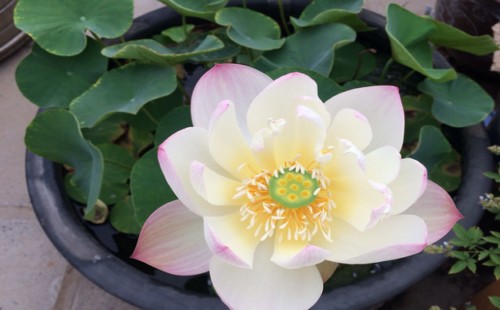
Although bowl lotus is an aquatic plant and cannot maintain normal growth without water, this does not mean that water alone is enough to grow it well. In fact, during its growth, bowl lotus mainly absorbs nutrients through its rhizomes, and the nutrients in water are often relatively scarce and cannot meet its growth needs; most nutrients are usually obtained from the mud at the bottom of the water. Without mud as a substrate, bowl lotus can hardly survive on water alone, let alone maintain normal growth.
Many friends crack open bowl lotus seeds and place them directly in water to grow them, only to find the seeds floating on the water surface or rotting, and in the end no seedlings are produced. In fact, sowing seeds directly in water basically makes it impossible for them to germinate and survive. Moreover, many friends grow them indoors, and due to factors such as lack of light and insufficient nutrients in the water, even if the seeds can sprout, they cannot anchor their roots, nor can the roots obtain the nutrients needed for growth from the water. So after the only nutrients in the water are used up, the seeds will rot.
Of course, during hydroponic growing, a small number of leaves may emerge, but often due to lack of nutrients and light, they grow very thin and small and can hardly grow normally, let alone bloom. Some friends also consider the importance of nutrients and therefore add some nutrient solution, but purchased nutrient solution after all does not have the natural effect of mud, especially since some nutrient solutions are not formulated according to scientific principles, which can accelerate seed rot. And even if the seeds do not rot, the growth of the seedlings is still worrying.
On the other hand, for the vast majority of flowers and plants, mud often has an innate advantage, and it is often the source of most nutrients. Especially for an aquatic plant like bowl lotus, it largely depends on soil to provide nutrients. Only when these nutrient elements are sufficiently abundant can the bowl lotus seedlings maintain normal growth and be encouraged to bloom. Another use of soil is that it allows bowl lotus to take root well and provides stable anchoring. Therefore, no matter what, bowl lotus usually needs soil to produce high-quality flowers.
Practice has also proved that adding mud during the cultivation of bowl lotus not only makes the plant grow more vigorously, but also results in more flowers and higher quality, and even the leaves are glossy green and quite ornamental. In daily life, if we want to grow bowl lotus, we first need to understand its growth habits, and then build a suitable growing environment according to those habits, so as to ensure the plant can maintain normal growth. This is not only true for bowl lotus; when growing any kind of flower or plant, we should follow this approach, because only then will our efforts bring rewards.