Potted Houttuynia Cordata: Growing Methods and Precautions
Houttuynia cordata, commonly known among the people as zhe'ergen, is a perennial herbaceous plant that can be both eaten and used as medicine, named for its fishy smell. Houttuynia cordata is widely distributed across the Yangtze River basin and many areas of southern China, and there are both wild and cultivated types.
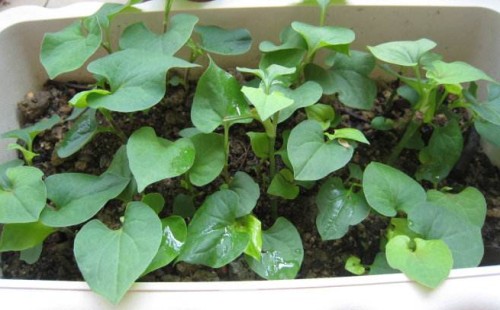
Houttuynia cordata is generally propagated by means of rhizomes, cuttings, division and so on, and although it can be grown from seed, this method is not commonly used. This is because the seedling emergence rate from sowing is very low, making it unsuitable whether for large-scale production or for home potted growing. So how do you grow Houttuynia cordata as a potted plant?
1. Light
Wild Houttuynia cordata generally grows in ditches, streams, ponds and other relatively humid yet fairly shaded environments, which shows that this plant likes moisture and tolerates shade. In fact, Houttuynia cordata is indeed rather afraid of light, especially strong light. If you grow it in a pot on a balcony, be sure to take shading measures, or simply place the pot in a cool spot with weaker light.
2. Temperature
Although Houttuynia cordata tolerates shade and fears strong light, this does not mean it likes a cold, shady growing environment. In fact, Houttuynia cordata rather likes warm environments, though its cold tolerance is indeed fairly strong, and it can overwinter successfully even in extreme cold of -15°C. Apart from the seedling stage, when temperature protection is needed, at other times of the year there is almost no need to worry about temperature changes.
3. Watering
Since Houttuynia cordata likes to grow in the wild near water sources, it must like water and moisture. As long as we normally provide moist conditions in line with its wild growing environment and keep the potting soil constantly moist, it will generally not suffer poor growth from lack of water. Once it lacks water, Houttuynia cordata will grow rather thin and weak, there will be fewer stems and leaves available for harvest, and its nutritional and medicinal value will be reduced. So in day-to-day care and management, we should replenish water and maintain moisture in good time, as long as it is not waterlogged.
4. Fertilizing
Houttuynia cordata rather likes fertile, loose, humus-rich acidic sandy loam, and in alkaline clay environments it often struggles to survive or grows too weakly. Therefore, besides requiring fertile, loose soil, we can also give it appropriate additional fertilizing to promote strong rhizomes and make the leaves grow plumper. However, if sufficient base fertilizer was applied to the potting soil when planting, there is no need for frequent topdressing in the early stage of growth. When the stems and leaves are growing very vigorously, we can topdress appropriately and also spray foliar fertilizer, mainly nitrogen fertilizer, since this is a plant that can be harvested many times.
The care and management of potted Houttuynia cordata mainly consists of doing the above four aspects well. As long as you can control light and temperature well and manage water and fertilizer well, not only will Houttuynia cordata maintain good growth, but even right after harvesting it can quickly recover its growth and can be harvested repeatedly.