What to Do When Yew Leaves Turn Yellow and Drop? Causes and Solutions
The yew (Taxus) is an excellent material for making foliage bonsai. It is shade-tolerant, drought-tolerant and cold-tolerant, and likes cool, humid conditions, but it fears full sun, especially the scorching sun of summer. If the light is too intense, it tends to grow poorly, and this is even more serious for young trees. Under normal growing conditions, the yew usually stays evergreen all year round, but sometimes improper care can cause its leaves to turn yellow and drop. So what should you do when yew leaves turn yellow and drop?
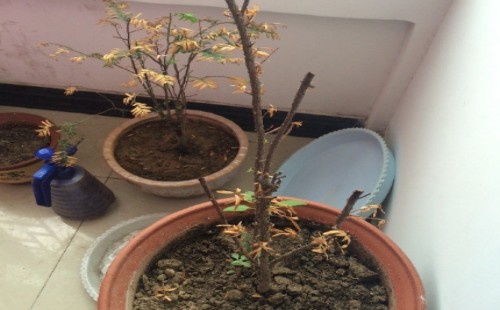
A good growing environment and scientific care methods are the prerequisites for keeping a yew bonsai growing normally, so we must not only learn how to plant yews but also learn how to care for and manage them, so as to avoid poor growth. However, sometimes neglect or improper management inevitably leads to poor growth in yews, mainly showing in the branches and leaves, with yellowing and dropping leaves being especially prominent. At this point, you must promptly find the root of the problem and then take remedial action.
1. Too much light
The yew is shade-tolerant and fairly sensitive to strong light, so if the light duration is too long, especially when the light is rather intense, the plant easily suffers severe dehydration, causing its leaves to scorch yellow and drop. Under normal circumstances, we only need to provide it with 4-6 hours of light exposure per day, and it is best to receive light in the morning and evening. When the temperature is high and the light is strong, shade measures should be taken in time, and it is best to keep it in a semi-shaded place for care.
When a yew bonsai develops scorched yellow leaves that drop at the slightest touch, it is generally caused by too long a light duration and overly strong light. So we should promptly take shading measures for it; we can place it under the shade of a large tree, or move it to a cool spot indoors. But if the yellowing and dropping of leaves is rather serious, we also need to thin out its branches and leaves to reduce the consumption of water and nutrients. This is quite beneficial for its recovery to normal growth.
2. Long-term water shortage
Although the yew is fairly drought-tolerant and afraid of waterlogging, watering should still be timely during ordinary care and management. Generally, water thoroughly as soon as the potting soil dries out and the branches and leaves show slight wilting; otherwise, there is usually no need to water. If the plant remains in a state of water shortage for a long time, and especially if the temperature is high and the weather is hot, the yew very easily develops withered yellow branches and leaves.
When this happens, we should still promptly cut off the withered yellow branches and leaves to save nutrients and water. Then water in time, and also spray water on the foliage frequently to keep it moist, and avoid direct sunlight to reduce water evaporation. As long as everyone takes remedial action according to scientific management methods, this condition can generally improve after a few days. In the later care and management process, you must then be careful to avoid similar situations.
3. Improper exposure to wind
The yew is not tolerant of water, and it also dehydrates fairly easily. Many bonsai enthusiasts like to keep yew bonsai indoors for care, and once summer or winter arrives they like to stay in their comfortable homes with the air conditioning on. If during this time the yew bonsai is directly facing the air conditioner vent, then over time it easily develops withered yellow, wilting branches and leaves. This is mainly caused by the temperature and wind speed making the branches and leaves evaporate water quickly.
So, although the yew is fairly shade-tolerant and it is generally harmless for many enthusiasts to move it indoors for care, it must never be placed directly facing an air conditioner vent. If this happens, promptly move the bonsai out of the room, or turn off the air conditioner, and at the same time spray more water on the foliage to keep it moist. Of course, if it is heating, you also need to guard against this problem, because the effects of heating and warm air conditioning are much the same.
4. Insufficient pruning
Although yew bonsai has high ornamental value, we must carry out all management measures well during daily care, otherwise poor growth may occur. Many enthusiasts think that the more luxuriant the yew and the denser the branches and leaves, the better, since it looks more ornamental when the plant is full of vitality. But if the branches and leaves at the lower part of the plant are too dense and are not thinned in time, it can still cause withered yellow and falling branches and leaves.
So, for yew bonsai, we should prune appropriately and regularly, especially the old and weak branches and leaves at the lower part of the plant that grow more slowly, to avoid them needlessly consuming large amounts of nutrients and water and thus weakening the growth of the upper branches and leaves. Moreover, proper thinning of branches and leaves not only saves nutrients but also promotes sprouting, keeps the bonsai evergreen all year round, and can further prevent withered yellow and falling branches and leaves, while also giving the bonsai a greater sense of layering and higher ornamental value.
Of course, besides the common situations above, there may be other factors, such as withered yellow and falling branches and leaves during the seedling recovery process just after transplanting into a pot, infection by pests and diseases, insufficient light, overwatering, and so on. In daily care and management, besides carrying out all care measures as well as possible, you should also frequently observe the growth state of the yew bonsai, and once a problem is found, solve it promptly to avoid greater damage.