How to grow potted honeysuckle? Detailed care methods
Honeysuckle is widely cultivated because of its extremely high medicinal value and health benefits, and its market prospects are good. However, besides growing it in the ground, honeysuckle can also be grown in pots. After dwarfing treatment, it can not only be used as medicine but also enjoyed for its ornamental value. But compared with growing it in the ground, the care and management work for potted honeysuckle often requires much more effort. So, how do you grow potted honeysuckle?
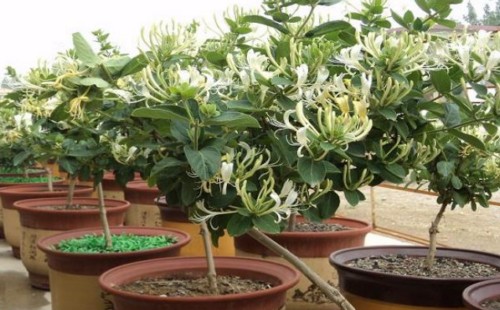
Honeysuckle has characteristics such as drought tolerance, cold tolerance, shade tolerance, water tolerance and tolerance of poor soil, but at the same time it also prefers a growing environment with plenty of light and warmth. If grown in the ground, it is often relatively easy to grow; even planted outdoors with minimal care, there is no need to worry about insufficient light or water, and only appropriate topdressing is needed. If grown in a pot, we often need to manage it from the following aspects.
1. Light
Honeysuckle is a sun-loving plant and usually needs to be given plenty of light while also ensuring the environment is well ventilated. If light is insufficient while water is relatively plentiful, the stems and vines of honeysuckle often become leggy, and the branches are also relatively slender and weak, while the leaves are prone to yellowing and falling off, thereby affecting flowering. Therefore, it generally needs to be given a long-day environment.
2. Temperature
Honeysuckle relatively prefers warmth and is also very cold-tolerant, with strong viability; it can often survive in an environment between -4°C and 35°C. When the temperature in the growing environment reaches 4°C, honeysuckle can sprout smoothly, and when the temperature reaches above 22°C, it can enter its first round of flowering. It generally grows best under temperature conditions of 11°C-25°C.
3. Watering
Because honeysuckle is grown in a pot, the space inside the flowerpot is, after all, limited, and it cannot obtain a large amount of water from the surrounding soil as it would when grown in the ground. Moreover, honeysuckle itself relatively prefers moisture and tolerates moisture, so during the growing season it should be watered in time, and watering once every 3-5 days can be maintained. But in spring, because the spring rains are continuous and there is often more rain, watering generally needs to be controlled appropriately; for regular watering, go by “water when dry, stop when wet,” and maintaining the soil moisture at around 30% is relatively suitable.
4. Fertilizing
Similarly, because the flowerpot space is limited and the amount of soil is small, nutrients are naturally limited as well. As the plant grows over the long term, the nutrients in the pot become fewer and fewer, so it is also necessary to topdress appropriately. However, before flower buds form, nitrogen fertilizer should be controlled or applied sparingly to avoid rampant growth of branches and leaves; instead, phosphorus and potassium fertilizer should be applied to greatly promote the formation of flower buds and increase the number of flowers. After the branches stop sprouting and growing, especially during the bud stage, nitrogen fertilizer should be appropriately applied, as this can improve the flowering quality of honeysuckle. During the growing season, focus on phosphorus and potassium fertilizer, and apply decomposed cake fertilizer water once a week to make the branches and vines thicker and stronger.
5. Pruning
During the growth period of honeysuckle, promptly prune away excessively vigorous, tangled and twining leggy branches and buds; for thin and weak branches and buds, also remove them promptly to avoid affecting ventilation and light penetration. For branches and buds that grow too vigorously during the growing season, promptly pinch them back, generally by cutting the long and keeping the short. If grown as a potted plant or bonsai, it also needs to be pruned from winter to before bud break the following spring to shape it, making the plant's layers more distinct.
6. Repotting
For potted honeysuckle, in addition to doing a good job with the management work in the above aspects, repotting is also necessary, and it can be maintained by repotting once every 2 years. If grown as bonsai, it can generally be maintained by repotting once every 3-4 years. If it is not repotted in time, it will inevitably affect the normal absorption function of the root system, causing the plant to show premature aging, which affects both tree vigor and flowering. Therefore, it is necessary for us to repot honeysuckle regularly.