How to grow a yew (Taxus) bonsai? Detailed guide to cultivation methods and precautions
The yew is a high-quality tree species for landscaping, with excellent greening and beautifying effects. At the same time, because it is easy to shape and highly ornamental, it is also often dwarfed and used to create high-grade bonsai masterpieces, and it stays evergreen through all four seasons, offering multiple ornamental effects: viewing the stem, branches, leaves, and fruit, elegant and noble. So, how do you grow a yew bonsai? Today, the editor will share with you the cultivation methods and precautions for yew bonsai.
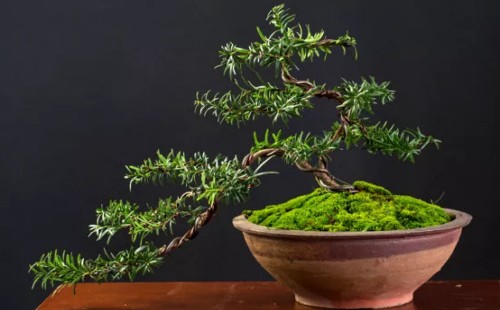
Although the yew is also an evergreen tree, its appearance is not entirely the same as many other bonsai tree species. The yew's trunk stays upright and grows upward, its plant shape is very graceful, and its leaf color is deep green all year round, so the bonsai made from it naturally has very high ornamental value. But the yew prefers a cool growing environment. It is not only drought-tolerant but also extremely cold-hardy, and can even remain safe and sound at temperatures of -30°C, though its optimal growing temperature is between 20-25°C, and it likes a sandy soil environment with good permeability. By managing it according to these habitual characteristics, we can grow it well.
I. Soil
The yew likes a fertile, loose, acidic soil environment rich in humus, with the PH value kept between 5-6.5. For bonsai cultivation, a mixed soil made from substrates such as peat soil, perlite, and leaf mold combined with ordinary loam is generally used. Of course, you can also grow it using only loam, except that later on you will need to apply fertilizer promptly to increase soil fertility.
II. Light
The yew likes a shady, cool growing environment and fears high temperatures and strong sunlight, so when summer temperatures rise, shade measures should be taken promptly, and it is recommended to move it indoors for care. But it must not be placed at an air conditioner vent or in a spot where sunlight often shines directly. At the same time, you can spray water more often to lower the temperature and maintain humidity, avoiding poor growth of the plant.
III. Watering
The yew is fairly drought-tolerant but not waterlogging-tolerant, so watering must be moderate at ordinary times. If the potting soil stays too wet or waterlogged for a long time, it easily causes root rot; but if it stays too dry and short of water for a long time, that is also bad for its growth. Generally, when the surface soil of the pot turns yellowish-white and the leaves curl slightly, you only need to spray water to maintain humidity; and when the surface layer of the potting soil turns white and hard, you should water thoroughly in time.
IV. Fertilizing
The yew fairly likes a fertile soil environment, but if sufficient base fertilizer was applied when potting, generally no topdressing is needed for the first 3 months. You can wait until 3 months after potting, then keep applying topdressing once every 2-3 months. However, it is not suitable to apply chemical fertilizer to the yew; organic fertilizer is mostly used, usually thin cake fertilizer water is best, then slowly pour it along the inner edge of the pot, and never let the fertilizer liquid get too close to the roots, otherwise it may cause fertilizer damage.
V. Pruning
Because the yew's root system inevitably suffers varying degrees of damage during transplanting and potting, and the plant has a process of recovering and adapting to the pot after transplanting, the yew's leaves often curl and dry up. At this time we can appropriately cut off some of its branches and leaves to reduce the consumption of nutrients and water. Moreover, after the plant has adapted to the pot and resumed normal growth, we can also use pruning methods to design various shapes for it. And in order to maintain a good shape, we also need to properly prune branches and leaves at ordinary times, and adjust the distribution of branches and leaves well.
VI. Repotting
The yew's first repotting is generally done after 2 years, because as the young plant grows stronger, its root system also becomes more developed, and the space and nutrients in the original pot are limited, so it needs to be repotted in time. Take the plant out of the original pot, then repot it into a larger flower pot, water it thoroughly to settle the roots, and place it in a shady environment to recover. After the plant has smoothly adapted to the pot, resume normal care and management.
VII. Diseases
In summer, a season prone to high-temperature drought or damp heat, the yew is often susceptible to attacks such as leaf blight and red blight, so measures such as keeping the environment shady and ventilated and lowering the temperature and maintaining humidity need to be taken. Once disease occurs, promptly use drugs such as Bordeaux mixture to spray and kill it.
For yew bonsai, in addition to doing well in the above aspects of care and management work, there are also the following precautions that we need everyone to pay attention to.
1. For newly transplanted and surviving yews, it is recommended to spray a diluted monopotassium phosphate solution once every 3-4 days in the morning or evening; after 3-4 consecutive sprays, the frequency can be gradually reduced month by month.
2. Watering should only be done after the potting soil has dried, and you need to water thoroughly; never give half-hearted watering. Because plants short of water in summer tend to droop their branches and leaves, in addition to increasing watering, you should also spray more water to maintain humidity and lower the temperature.
3. The yew fairly fears strong light, so when the temperature rises and the light becomes strong, shade measures should be taken promptly, especially in summer; but in other seasons, if the light is not strong, no shading is needed. Since the yew likes a shady, cool growing environment, both temperature and light must be controlled well.
4. For watering or spraying the yew, it is not advisable to use tea water; even tap water needs to be left standing for a few days before use. And watering should be moderate, to avoid waterlogging and root suffocation caused by watering too frequently.