What to Do When Hydrangea Leaves Turn Yellow? Find the Cause and Treat It Accordingly
Did you know? There is a flower that symbolizes "unity," blooming in tight, clustered heads, and because the flowers are so compact, people gave it the lovely name "hydrangea." This plant is not only often used as a cut flower material, but is also very well suited to growing in pots! It displays its beautiful appearance all year round, and it looks even more beautiful in autumn.
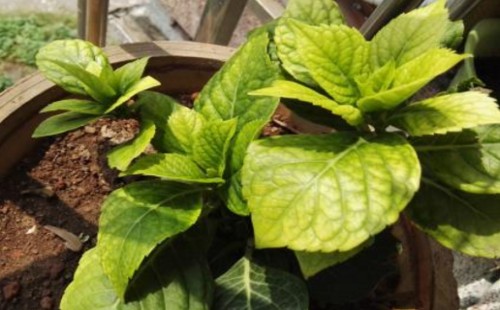
The hydrangea is full and beautiful, elegant yet not overly formal, and its potted ornamental effect is excellent. But during care and management, we need to tend it carefully, otherwise growth problems may appear, and the most common phenomenon is yellowing leaves. So when we encounter yellowing leaves on a potted hydrangea, what should we do? Of course, we still need to start by checking how we use our routine care and management methods.
When a hydrangea shows yellowing leaves, it is usually caused by improper management of water, fertilizer, light and temperature. So we should make these aspects the focus of our investigation. Since the hydrangea is a perennial plant with poor water tolerance, it generally prefers dry conditions to wet ones, but if it remains in a state of water shortage for a long time, yellowing leaves and leaf drop will still occur. Overwatering is naturally no good either, as it makes the potting soil too wet, which goes against its growing habit of disliking moisture. So too-wet potting soil can also cause yellowing leaves and leaf drop, which in turn affects the plant's normal growth.
If a potted hydrangea shows localized yellowing of leaves, it may be caused by excessive alkalinity in the potting soil. This is because excessive alkalinity hinders its normal uptake function and prevents it from absorbing the trace elements needed to sustain its own growth. If this is the cause of the plant's iron-deficiency yellowing, we might add a small amount of ferrous sulfate when watering the plant, and I believe the yellowing will be curbed before long. However, relying only on iron intake often only turns the yellowing new leaves green again, while a large portion of the old leaves still will not improve. So we also need to adopt other supplementary measures to help the plant return to a lush green state.
When fertilizing normally, it is best to adopt the method of "light fertilizer, frequent application," and by all means avoid applying concentrated fertilizer or raw fertilizer, as either can cause root burn. If the plant's root system is damaged, it will inevitably affect the plant's normal growth, and yellowing leaves and leaf drop will follow. If too much fertilizer has been applied, water promptly with clear water to dilute as much of the excess fertilizer accumulated in the potting soil as possible, until it is flushed out through the drainage hole at the bottom of the pot.
However, hydrangeas sometimes also develop yellow leaves due to improper light and temperature management. If the light is too strong, especially in the hot summer, continuous exposure to blazing sun will not only cause yellowing leaves but also make the branches and leaves wither. But if the hydrangea is kept in a light-deficient environment for a long time, it will also show this poor-growth phenomenon because it cannot get light to promote photosynthesis. In addition, temperature also plays an important role in the growth of hydrangeas. Too high or too low a temperature is unsuitable, and will not only cause the plant's leaves to turn yellow but also easily trigger a series of other poor-growth problems.
When we find that a potted hydrangea has yellowing leaves, we should first promptly remove the yellowing leaves to avoid them consuming too many nutrients and water, which would affect the growth of healthy branches and leaves. Then place it in an environment with ample light and good ventilation for care. If there are still remaining flowers on the plant at this time, they also need to be removed to reduce nutrient consumption. As long as everyone adopts scientific and reasonable methods for care and management afterward, I believe the hydrangea will eventually return to a normal growth state.