What are the reasons for yellowing leaves on hydroponic lucky bamboo?
Lucky bamboo can be grown not only in soil as a potted plant, but also hydroponically in water, but the growing media they use are completely different. Soil-grown lucky bamboo naturally cannot do without soil, but the potting soil is required to be fertile and loose, breathable and well-draining; hydroponic lucky bamboo, on the other hand, must of course be grown in water. But no matter which method is used for growing it, as long as the usual care and management methods are correct, it can often stay evergreen all year round and display extremely high ornamental value.
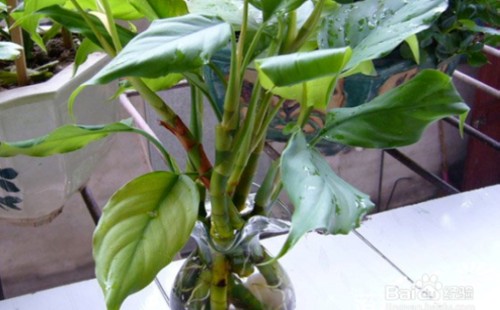
However, whether lucky bamboo is grown in soil or hydroponically, if the care and management work is not done well, growth problems are equally likely to occur. Among them, the most obvious is the phenomenon of yellowing leaves on the plant. In the previous article "What to Do When Potted Lucky Bamboo Leaves Turn Yellow and Droop", the editor talked about the causes of yellow leaves in soil-grown lucky bamboo and the precautions for handling and preventing them. So why do hydroponic lucky bamboo leaves turn yellow? Today, the editor will continue to share with you related knowledge about the yellowing phenomenon in lucky bamboo.
After repeated practice and drawing on the experience of veteran hydroponic lucky bamboo growers, the editor found that the yellowing of hydroponic lucky bamboo leaves is often closely related to light, water quality, and nutrients. Below, the editor will provide an in-depth analysis and explanation.
1. Improper lighting
Plants need light to carry out photosynthesis, thereby speeding up metabolism and promoting plant growth. The same is true for lucky bamboo; whether grown in soil or hydroponically, it cannot go without light for a long time. If the environment where hydroponic lucky bamboo is kept is shaded, in a place lacking light for a long time it will easily develop leggy, yellowing branches and leaves, which not only affects the plant's growth but also greatly reduces its ornamental value.
Therefore, we usually need to find a suitable placement environment for hydroponic lucky bamboo, requiring that it can receive appropriate light and also have smooth ventilation. A place that satisfies these two conditions is usually a bright spot near a windowsill. Of course, it can also be placed on a relatively open balcony, where it can receive light more fully and ensure smoother ventilation. However, if the sunlight is too strong, shading measures need to be taken to avoid direct exposure, and providing some scattered light is sufficient.
2. Deteriorating water quality
If the water quality used for hydroponic lucky bamboo is poor, it may cause some damage to the plant's root system, and in severe cases may trigger root rot, further leading to disease, thus creating a vicious cycle; in mild cases it causes yellowing leaves in lucky bamboo, and in severe cases it may even cause death. Therefore, in the process of hydroponic lucky bamboo growing, the choice of water quality is very important.
When water quality problems occur, usually the water source is clean, and it is often due to not changing the water in time or the water in the container being dirtied during that period, causing contamination and thus changing the water quality. To ensure that the water quality does not undergo major changes, it is usually necessary to replace the water in the container every 5-7 days. And this replacement does not mean changing all of it; usually it is appropriate to replace about 2/3 of the water in the container. In this way, it not only helps keep the water in the container relatively clean, but also benefits the sprouting and growth of the plant's root system, thereby promoting the plant's growth.
3. Insufficient nutrients
In the process of hydroponic lucky bamboo growing, the most frequently used care method is changing the water. If the water is not changed in time, not only are pathogens likely to breed in the water, causing changes in water quality, but nutrients will also be lacking. Even if the water is changed in time, sometimes it is still necessary to supplement some nutrients for it, especially during the season when lucky bamboo grows rapidly. When nutrients are insufficient, the phenomenon of yellowing leaves often appears. Therefore, in addition to changing the water, appropriately adding some nutrients for it is also necessary.
Adding nutrients for lucky bamboo is usually done when changing the water. When changing the water, you can drip a few drops of nutrient solution into the water to increase nutrients, and this can be carried out according to the standard of dripping 6 drops of nutrient solution per liter of water. Then shake the water evenly and pour it into the container for growing lucky bamboo. The root system will absorb the supplemented nutrients together with the water and transport them to all parts of the plant, thereby promoting the plant's growth. It should be noted that too much nutrient solution must not be dripped in, otherwise it is likely to cause waste, and at the same time it will make the fertilizer concentration too high and the effect too strong, thus possibly causing fertilizer damage.