Reasons Why Orange Jessamine Does Not Bloom and Solutions
Orange jessamine (Murraya paniculata) is an evergreen tree species with fragrant flowers, and it is one of the best materials for making bonsai, especially when its collected wild stumps are made into stump bonsai of various forms and graceful postures, giving it even higher ornamental value. Usually, only when an orange jessamine bonsai has a good shape, lush branches and leaves, and fragrant flowers can it display its greatest ornamental value. Unlike other bonsai tree species, an orange jessamine bonsai releases a pleasant fragrance only when it blooms, and if the orange jessamine does not bloom, it will not only reduce its ornamental value to a certain extent but also lose its pleasant fragrance. So, what should be done if the orange jessamine does not bloom?
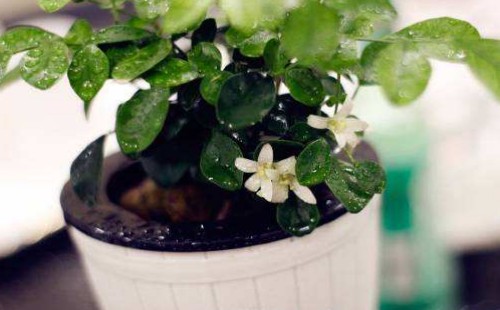
Undoubtedly, if an orange jessamine bonsai does not bloom, we should do our utmost to make it bloom, and make it bloom abundantly with lush foliage and fragrance all around. Under normal care and management, orange jessamine will bloom as expected, and its flowering period is generally from April to August, though it may sometimes also bloom in autumn from August to October. Since the time has been mentioned and it still does not bloom, there must be a problem with its growth, and the cause of such growth problems is generally an unsuitable growing environment or unscientific care and management methods.
If the orange jessamine does not bloom, then we must first find the reason why it does not bloom, and only then can we adjust our care strategy to encourage it to bloom. Practice has shown that there are usually four situations in which orange jessamine does not bloom:
1. Lack of light
Orange jessamine is a sun-loving, light-demanding tree species. As long as the temperature is suitable, we should provide it with sufficient light so that it can carry out normal photosynthesis and lay a good foundation for blooming. Apart from avoiding scorching sun exposure in midsummer, it is generally unnecessary to take shading measures at other times of the year, so that it can receive as much light as possible. If there is often insufficient light, it will often lead to the phenomenon of orange jessamine not blooming after entering its flowering period. If the failure to bloom is caused by insufficient light, we only need to improve the lighting conditions and provide it with sufficient light.
2. Insufficient watering
Everyone knows that flowering plants consume a large amount of nutrients and water during their flowering period, especially water, so that they can support smooth blooming. The same is true for orange jessamine. If sufficient water is not stored before the flowering period, it will be difficult to bloom when the flowering period arrives, or it will bloom very little, and even if it blooms, its quality will not be high. Therefore, generally before bud formation, watering should be increased so that the plant can store sufficient water to ensure smooth bud formation and blooming on schedule. Although orange jessamine is also relatively drought-tolerant, after all, the flowering period consumes a large amount of water, so it is essential to water it thoroughly before flowering.
3. Too few nutrients
If the soil in which orange jessamine is planted contains too few nutrients, or nutrients that are too one-sided, it may likewise affect flowering. Like water, nutrients are also an important support for ensuring blooming. The most direct way to supplement nutrients is topdressing, but topdressing also requires controlling the proportion of elements well. Generally, during the growing period, nitrogen fertilizer is the main type applied, with phosphorus and potassium fertilizers as supplements; but to promote flowering, the opposite is often done, with phosphorus and potassium fertilizers as the main type and nitrogen fertilizer as a supplement. However, topdressing should not be excessive; it is best to use thin, low-concentration fertilizer, and absolutely avoid applying concentrated fertilizer or raw fertilizer, otherwise it may cause fertilizer damage, which will not only cause failure to bloom but also affect the normal growth of the plant.
4. Wrong timing
If all the growing conditions of the orange jessamine bonsai are met, and the growing environment is also relatively suitable, yet it still does not bloom, then it may simply not be time for it to bloom yet. If the care and management work is done well, orange jessamine can bloom twice a year, but it usually blooms from April to August in spring and summer, and it may also bloom after autumn, generally from August to October. If these two time periods have not yet arrived, it is normal for the orange jessamine bonsai not to bloom. In this case, we only need to proceed with normal care and management. Therefore, when growing flowering plants in pots, we must learn about their flowering periods in advance to avoid making fools of ourselves.