How to grow a rhododendron bonsai so it blooms profusely
Rhododendron bonsai blooms gorgeously and has high ornamental value, but we need to create a comfortable growing environment for it, and the daily care and management work must be done well. Only in this way can the rhododendron have the conditions to bloom profusely. So, exactly how should it be managed to make a rhododendron bonsai bloom profusely? Today, the editor will discuss with everyone the care and management methods for making a rhododendron bonsai bloom more!
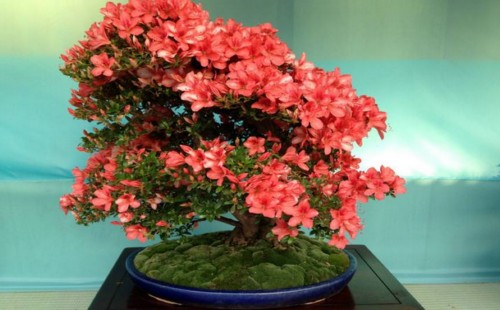
I. Growing environment
First, we need to prepare a high-quality soil environment for the rhododendron bonsai. Since rhododendrons like fertile, loose, humus-rich, well-draining acidic soil, we need to mix soil for them according to this standard. And based on the rhododendron's characteristic of liking a cool and humid climate, the placement location we choose needs to remain semi-shaded and ventilated, because the plant is prone to pests and diseases in a hot, humid, and unventilated environment. At the same time, the placement location should also make water management convenient.
II. Scientific watering
Only when the rhododendron bonsai maintains good growth can it have the conditions to bloom. So in addition to scientific lighting and suitable temperature, the watering work must also be done well. But considering that rhododendrons are shallow-rooted plants and are generally planted shallowly, the soil cannot be loosened, otherwise the roots are easily damaged. Therefore, the water source chosen has certain requirements for water quality, especially avoiding the use of alkaline water sources, with soft water being best. This can avoid or delay the soil in the pot becoming compacted. Moreover, replenishing water should preferably be done by the soaking-pot method, which is more thorough and can also avoid washing the rhododendron's roots out due to direct watering. At the same time, it is also necessary to combine spraying water on the leaf surfaces and the ground to maintain moisture and lower the temperature, especially during the summer flowering period.
III. Reasonable fertilizing
For most flowering plants, because summer temperatures are high and the weather is hot, it is not suitable to apply additional fertilizer. The same is true for rhododendron bonsai, but since the rhododendron's peak flowering period is in summer, it often needs a large amount of nutrients to support its blooming, so nutrients need to be prepared in sufficient quantities in advance. But even so, additional fertilizing for rhododendrons should be done before flowering, mainly to promote flower bud differentiation. Generally, during the flower bud differentiation stage and the bud stage, a thin phosphorus fertilizer can be applied once about every 10 days to promote flowering. One month before flowering, phosphorus fertilizer can be applied 1-2 times, and after flowering, a compound fertilizer can also be applied 1-2 times to restore the tree's vigor.
IV. Proper pruning
Pruning of rhododendron bonsai can be done before and after the flowering period. Pruning before flowering is to save some nutrients and promote the growth of flowering branches, mainly cutting off old, weak, diseased, and disabled branches and branches that affect the beauty of the plant shape, thereby improving the bonsai's air permeability, improving ventilation, and increasing light exposure, so as to better promote plant growth; pruning after flowering is mainly to reduce nutrient consumption, thereby quickly restoring the tree's vigor and maintaining a beautiful plant shape. In order to promote flowering and produce more flowering branches, we especially need to do a good job of pruning in spring.
V. Pest and disease control
Pests and diseases are an important factor affecting the flowering of rhododendron bonsai, so we should do a good job of prevention and control in ordinary times. Once a rhododendron bonsai is attacked by pests and diseases, it will inevitably affect the tree's vigor and inhibit growth, thereby affecting the flowering effect. Therefore, it is necessary to use medicine in time to spray and kill them, ensuring that the plant can maintain a normal growth state and will not affect the flowering time and effect. And the hot, humid, and unventilated environment during the flowering period is often prone to breeding pests and diseases, so we must do a good job of improving the growing environment of the rhododendron bonsai.