How do you keep the leaves of the Peace Tree green? These care methods you need to know
Just as its name suggests, the Peace Tree is a tree species with an auspicious meaning. Because its branches and leaves stay evergreen all year round, it has high ornamental value and is also very practical, so it is quite suitable for growing as an indoor foliage potted plant. Since the Peace Tree is suitable for indoor foliage display, its ornamental value must be expressed through its green leaves, so how to keep the leaves of the Peace Tree green is the key point in our daily care and management. So, how do you keep the leaves of the Peace Tree green?
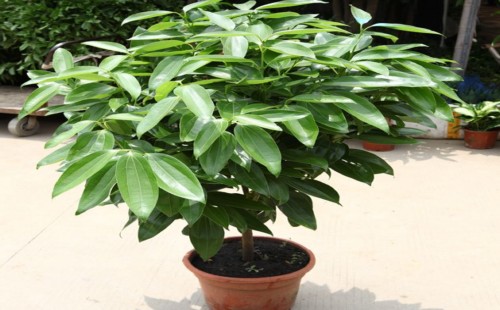
To keep the leaves of a potted Peace Tree green, we first need to become familiar with its growth habits, and then use those habit characteristics to create a comfortable environment suitable for its growth. The Peace Tree likes a warm, humid growing environment with plenty of light, and it also has a certain tolerance for shade, but it is neither drought-tolerant nor high-temperature-tolerant, and it is also not tolerant of waterlogging or cold. Compared with other tree species, it is relatively fond of fertilizer. So we can use these conditions to create its growing environment and carry out care and management.
1. Soil
The Peace Tree likes a fertile, loose, breathable, well-draining, organic-rich, slightly acidic soil environment, so we need to appropriately improve the soil quality on this most basic standard to ensure the potting soil does not easily become compacted, has strong permeability, and has suitable acidity. The editor recommends using garden soil, leaf mold, river sand, sawdust or carbonized rice husks, etc., mixed in appropriate proportions, to make the potting soil more fertile and loose.
2. Light
Although the Peace Tree has a certain tolerance for shade, it also prefers a growing environment with plenty of light, especially during the growing season. Because sufficient light can accelerate photosynthesis in the leaves, thereby prompting the plant's leaves to grow more brightly and emerald green. However, it should be noted that shade measures should be taken promptly under the scorching sun in summer. Although the Peace Tree likes light, it is also afraid of being exposed to the scorching sun, otherwise its green leaves can easily be scorched.
3. Temperature
The Peace Tree grows best in a temperature environment between 20-30°C. If you want it to maintain normal growth, the minimum temperature generally should not be lower than 18°C. To overwinter safely, the winter temperature also should not be lower than 5°C, otherwise frost damage can easily occur. But in midsummer, temperatures often exceed 30°C, so we also need to do a series of tasks such as ventilation, moisture retention and cooling, otherwise the plant can easily develop yellowing and falling branches and leaves, and the leaves will find it hard to stay fresh and green. Therefore, creating a suitable temperature environment for the Peace Tree is very important.
4. Watering
Water is one of the most important conditions for ensuring that a potted Peace Tree maintains normal growth. Original Since the Peace Tree quite likes a humid growing environment, both the potting soil humidity and the air humidity have relatively high requirements, so the work of replenishing water and retaining moisture must be done well. But at the same time, the Peace Tree is not tolerant of water, so ordinary watering should not be excessive. Generally, when the surface of the potting soil becomes dry and cracks, water thoroughly, and in the dry season spray the leaves with water more often to keep the leaves fresh and green. In the rainy season, measures should be taken to avoid rain, and when the humidity inside the pot is too high, drainage should be done promptly. Because the root system of the Peace Tree is mostly fibrous roots, in addition to watering promptly, water accumulation should also be avoided, otherwise root rot can easily occur. But in order to make the leaves greener and also increase their glossiness, we can combine watering with dropping a few drops of vinegar into the water to increase acidity. Generally, this can be done 1-2 times per month.
5. Fertilizing
The Peace Tree is relatively fond of fertilizer. In addition to adding sufficient base fertilizer when potting, topdressing is also needed in ordinary times. Because the leaves of the Peace Tree are large and numerous, they need to consume a large amount of nutrients to maintain a fresh green state, and the growing season has a high fertilizer demand, so a thin cake fertilizer water or alum fertilizer water can be applied once a month. In autumn, generally 2 applications can be made of a phosphorus-potassium fertilizer mainly composed of monopotassium phosphate with the concentration controlled at 0.2-0.3%, to improve the plant's cold resistance and lay a good foundation for a safe and smooth overwintering. In particular, the fertilizer concentration must be well controlled, because the root system of the Peace Tree is mostly fibrous roots and its ability to absorb nutrients is limited; too high a concentration will cause root burn.
6. Pruning
The Peace Tree is relatively tolerant of pruning, and generally it can be done in all four seasons, while pruning branches is an important means of promoting rapid sprouting, branch growth and leaf development in the plant. If you want the plant to quickly push out green leaves, generally prune during the spring and autumn growing seasons. Although pruning a potted Peace Tree can also be done in summer and winter, the plant is often affected by high or low temperatures, and even if branches are pruned, sprouting and leaf growth are often relatively slow, making it difficult to achieve the effect of rapid greening.