What are the maintenance methods for a Vitex bonsai with a gnarled trunk?
The Vitex bonsai with a gnarled trunk has a highly variable shape, evergreen branches and leaves, and blooms with purple flowers accompanied by a faint fragrance, giving it extremely high ornamental value. At the same time, Vitex also has tenacious vitality and can adapt well to harsh growing environments. Vitex not only likes light and warmth, but is also shade-tolerant and cold-tolerant, and it is not demanding about soil; it likes moisture. So based on these habit characteristics, we can easily grasp its growth patterns and create a good growing environment for it.
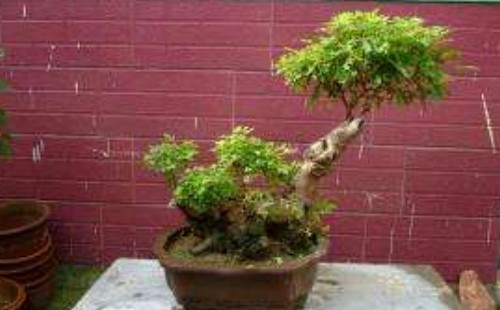
Since Vitex bonsai has tenacious vitality and can adapt to relatively harsh growing environments, it is naturally relatively easy to grow well. Even when kept indoors for care, it is often relatively easy to grow well. So how do you grow Vitex bonsai? Below, the editor will share with you the maintenance and management methods for a Vitex bonsai with a gnarled trunk.
1. Potting soil
Many varieties of Vitex are relatively tolerant of poor soil and have low soil requirements; they can often survive even in mildly salinized soil environments. But in order to help them maintain better growth, we generally still need to prepare a fertile, loose, breathable and water-permeable soil environment for them. And we need to use a deep pot for growing them. Although Vitex is a shallow-rooted tree species, its root system is still relatively well developed and it relatively prefers deep soil.
2. Light
Vitex likes light, especially during the growing season. When light is sufficient, the tree grows better, and its leaves become more vividly green, giving it higher ornamental value. But under the scorching sun in summer, appropriate shading is also recommended to avoid burning its leaves. At the same time, Vitex is also relatively shade-tolerant, so it is also suitable for placement indoors for care. However, the indoor environment should not be too shady either. Generally, place it in a bright spot facing the sun so it can receive scattered light to maintain normal photosynthesis.
3. Temperature
Vitex likes a warm growing environment, so it is often seen across vast areas of southern China. However, Vitex is also relatively cold-tolerant, and can even withstand a low temperature environment of -5°C. Black wattle, in particular, can even withstand an ultra-low temperature environment of -60°C for a short period without being frozen to death. However, Vitex is relatively sensitive to frost, so when winter temperatures are too low, timely warmth and cold protection measures are also needed to avoid frost damage affecting overwintering.
4. Watering
Although Vitex relatively likes a moist growing environment, its water tolerance is not strong. If it is watered too much and the tree's root system is soaked in water for a long time, it often causes root suffocation, especially in high-temperature weather. So as long as the potting soil is not particularly dry, there is generally no need to rush to water; usually you need to wait until the potting soil becomes dry before watering thoroughly.
5. Fertilizing
Vitex has tenacious vitality, which is well demonstrated in its growth process in the wild. Because Vitex is relatively tolerant of poor soil, it does not depend heavily on fertilizer. Even when fertilizing, it is usually mainly with dilute fertilizer. Never apply a large amount of fertilizer, otherwise it is relatively easy to cause excessive growth of branches and leaves, which can easily change the bonsai's shape and thereby affect its ornamental value.
6. Pests and diseases
Because there are relatively many harmful pathogens in the soil, this is often quite harmful to a Vitex gnarled trunk. So in addition to recommending disinfection and sterilization treatment of the potting soil when potting, it is also necessary to do a good job of prevention and control during routine maintenance and management. Different Vitex varieties are sometimes also prone to attacks by different pests and diseases. Common ones include anthracnose, damping-off, gummosis, black cicadas, scarab beetles, butterflies and moths, leaf beetles, and so on. So in addition to improving a relatively suitable growing environment, it is also necessary to do the related care and management work well.
Of course, the above points are several important aspects of growing a Vitex bonsai with a gnarled trunk well. If you want to keep a Vitex bonsai with a gnarled trunk in good ornamental condition, it is often also necessary to do pruning, shaping, repotting and other related work well. The editor will not go into them one by one here, and hopes everyone will explore and summarize more in practice.