Methods and Tips for Summer Care and Management of Balcony Bonsai
Many bonsai enthusiasts like to grow some bonsai plants on their own balconies. On one hand, they can decorate the space; on the other hand, they can enjoy them, and at the same time they can bring us a touch of greenery and a sense of coolness in summer. However, precisely because summer weather is hot and temperatures are high, bonsai plants also become hard to endure, so care and management work becomes very critical. So, how should balcony bonsai be cared for and managed in summer?
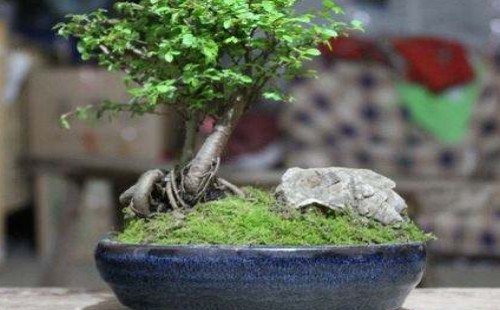
Summer often brings scorching sun and unbearable heat, especially in midsummer, so care and management work for bonsai often brings quite a few difficulties. With the slightest carelessness, it may cause poor growth in bonsai plants in mild cases, or even death in severe cases. But whether balcony bonsai plants show poor growth or die, it often brings us some losses, and at the very least affects their ornamental value. Today, the editor will share with you the methods and tips for summer care and management of balcony bonsai.
I. Summer Pruning Management of Balcony Bonsai
Because the high-temperature and high-heat weather environment in summer has a certain impact on the growth of balcony bonsai plants, especially the excessively fast evaporation of water, in order to reduce water evaporation, besides needing to replenish water in time, it is also necessary to do a good job in summer pruning, cutting off excess branches and leaves to reduce water evaporation, because bonsai plants often rely on leaves to evaporate large amounts of water. And in order to do a good job in pruning, we need to master the basic principles of summer pruning.
1. In summer, the crown of bonsai plants should be allowed to maintain good ventilation and light transmission, which is more conducive to plant growth and can also reduce the chance of infection by pests and diseases. In this case, the main approach is thinning pruning, cutting off overly dense branches to improve the ventilation and light transmission effect of the tree body. If necessary, it also needs to be combined with leaf removal.
2. During summer pruning, it is also necessary to pinch the tender shoots in time, mainly to avoid excessive growth of branches and leaves that damages the original beautiful shape of the bonsai plant. At the same time, it can also accelerate the lignification of new branches. For flowering plants that bloom in summer, it can also promote the differentiation and formation of flower buds, increasing the number and quality of flowers.
3. Cut off all old, weak, diseased and disabled branches to prevent them from consuming nutrients and water in vain, and at the same time prevent the spread of pests and diseases. For some weak branches whose removal may change the beauty of the shape, they can be appropriately shortened rather than completely cut off. If they are accidentally cut by mistake, new branches still need to be cultivated at the cut position later, so as not to damage the beauty of the branch shape.
4. For tree species such as plane trees and redbuds, a large number of suckers are often likely to grow in summer. If they are allowed to grow, they will not only disrupt the tree shape, thereby damaging the beauty of the plant shape and affecting ornamental value, but also consume a large amount of nutrients, so they need to be removed in time.
In addition, during summer pruning, we also need to master the basic requirements of pruning:
1. Whether cutting off branches or shortening branches and trunks, we are often required to make the cut in one go as much as possible, keeping the cut smooth. Never directly break or tear off branches, otherwise it is not only easy to injure fingers, but may also cause tearing of the branches and trunks of bonsai trees, which not only affects the beauty of the bonsai but also affects its normal growth.
2. When shortening branches, it is generally necessary to reserve an outer bud as a backup, and the cut should be kept about 1 cm or more away from the reserved bud. If the distance is too close, the reserved bud is very likely to die, and even if it is kept, it will be of no use.
3. When pruning or shortening large branches or sturdy thick roots with a diameter of 2 cm or more, the smoothness of the cut must be maintained to avoid frequent tearing marks. At the same time, an antiseptic should be applied to the cut in time to avoid excessive water loss caused by sap seepage, thereby weakening the tree vigor and also increasing the risk of infection by pests and diseases.
II. Care and Management of Balcony Bonsai
In summer, in addition to scientific pruning treatment for balcony bonsai, it is also necessary to do a good job in care and management during this period. Generally, there are five taboos that must not be crossed.
1. Avoid sudden shading
When the summer temperature reaches as high as 28°C, shading measures should be taken for balcony bonsai in time, because many bonsai plants easily enter a dormant state after the temperature reaches 30°C, thereby stopping growth. But if they are moved to a shady place, they must not suddenly be placed in a shaded place with too low a temperature. Generally, maintaining a temperature difference of about 2-3°C is more suitable. Because if they are suddenly placed in a shaded position with too low a temperature, the plant will find it difficult to adapt to the new environment for a while, and within a few days the leaves will wilt, fall off, or even the branches and trunks will wither and die.
2. Avoid midday bathing
In normal seasons, bonsai plants can generally receive a full-sun bath, especially sun-loving bonsai plants, and they should also be provided with sufficient light. But in summer, due to high temperatures and overly strong light, most plants are not suitable for long periods of exposure. Especially around noon, that period is often the time of day with the highest temperature. During this period, bonsai must not be watered or sprayed, otherwise a huge temperature difference will occur instantly, which can easily cause the "baozi effect", and for bonsai plants this is often relatively fatal. Watering and spraying should also avoid this high-temperature period and are suitable in the morning and evening.
3. Avoid drought
Because the high-temperature environment in summer is relatively harsh, water consumption is very large, so the potting soil also dries out very easily and quickly, so watering must be timely. Do not neglect replenishing water for bonsai because you are too busy or for other reasons. If this continues, the bonsai is very likely to become yellow and withered due to lack of water, or even die. Under normal circumstances, when the potting soil is seen to have dried and the leaves show slight wilting, water should be given in time, and the leaves will quickly return to normal. Therefore, watering in summer must be timely. Do not water whenever you remember and fail to water when you do not remember, otherwise sooner or later the bonsai plants will have problems.
4. Avoid water supplementation
When the outdoor temperature in summer exceeds 28°C, we should take shading and cooling measures in time. But in real life, many bonsai enthusiasts use spraying water to cool down, thinking that doing so can both cool the temperature and achieve the purpose of moisturizing. In fact, this is a misunderstanding, and even a wrong practice. Because when the outdoor temperature is too high, even if water is sprayed or watered, the water will quickly evaporate, thus failing to achieve the purpose of replenishing water. Moreover, more seriously, after spraying or watering, a relatively large temperature difference will form locally, thereby causing certain harm to the bonsai. After all, water needs to absorb a large amount of heat during the evaporation process.
5. Avoid fertilizing
For most bonsai plants, it is generally not suitable to fertilize in summer. Even for flowering plants whose flowering period is in summer, it is also not suitable to apply additional fertilizer during the flowering period, especially in midsummer, when additional fertilizing should be avoided even more. Many bonsai enthusiasts, in order to promote the flowering of plants that bloom in summer, blindly apply additional fertilizer and ultimately cause fertilizer damage, burning the plant's root system. This is mainly because under high summer temperatures water evaporates quickly, and the relative concentration of the fertilizer solution will suddenly surge, thereby burning the plant's root system. Moreover, when fertilizing under such circumstances, the cell concentration in the plant body will be lower than the concentration of the external environment, often causing the cell water in the plant body to flow into the soil, thereby causing the tree body to wither and die due to dehydration. Therefore, balcony bonsai should not be fertilized in summer.