Treatment Methods for Peace Lily Infected with Leaf Blight
The worst thing about keeping potted plants is pests and diseases, especially for indoor foliage potted plants. Once infected with pests and diseases, it will not only affect the normal growth of the plant, but also reduce the ornamental value of the potted plant, and may even bring health effects to our living space. After all, plants suffering from pests and diseases will produce a lot of bacteria, secretions, excrement and other filthy substances, and these substances will happen to pollute our living environment, and then cause harm to human health. This is also true for the Peace Lily as a tree species more suitable for indoor foliage, especially after being infected with leaf blight, which needs to be dealt with in time, otherwise the harm is great. So, how do you treat a Peace Lily infected with leaf blight?
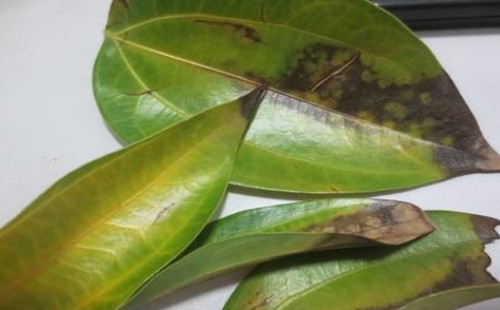
Potted green plants are mainly infected with leaf blight due to an unsuitable growing environment, especially for tree species like the Peace Lily that like a warm and humid growing environment. And a warm, humid and unventilated growing environment is exactly a hotbed for various pests and diseases, so in addition to choosing a suitable placement position, you also need to do a good job in daily care and management, especially the ventilation conditions must be good. This can avoid or reduce the risk of pests and diseases. However, once the Peace Lily is found to be infected with leaf blight, we need to take targeted measures to remove it.
Leaf blight is actually also called “leaf spot disease”, and it is mainly that pathogens invade the leaves through the leaf margins or leaf tips. The initial manifestation of leaves infected with this disease is the production of small light yellow spots, and if not dealt with in time, these small spots will gradually spread until they cover the entire leaf. The color of the small spots will also change from the initial light yellow to grayish brown, or even gray. In the later stage, when the disease is severe, the spot color will gradually turn black, eventually causing large areas of the leaves to dry up, generally spreading from old leaves to new leaves.
Leaf blight generally appears in a hot, humid and unventilated environment, and the disease is often more severe when nutrients are insufficient or when the plant is damaged by freezing or injury. It is generally easier for it to invade new leaves in summer and autumn, and after overwintering it is more likely to occur on old leaves. Because this disease is highly harmful, destructive and easy to spread, once we find it we must deal with it in time to avoid bringing us greater losses. If a potted Peace Lily is infected with leaf blight, we mainly handle it by taking the following measures:
In late autumn and early winter, promptly cut off the leaves infected with the disease, and then destroy in a centralized way the leaves scattered in the pot and on the ground. Because this disease is relatively stubborn and very easy to spread, even if the leaves are cut off, they must be disposed of promptly and thoroughly. This can reduce or eliminate the pathogens that will continue to cause infection the next year. At the same time, it is also necessary to strengthen water and fertilizer management, especially topdressing potassium fertilizer, do a good job in moisture retention and drought prevention measures, and also avoid water accumulation and waterlogging, so as to strengthen the resistance of the Peace Lily and increase its disease resistance.
In the early stage of the Peace Lily suffering from leaf blight, we can use 25% propiconazole emulsifiable concentrate, then dilute it with water at a ratio of 500 times, and then spray it on the potted Peace Lily plant, generally once a month. Or use 40% sulfur suspension concentrate, also dilute it with water at a ratio of 500 times and spray the plant, keeping it once every 10 days, and generally spraying continuously 2-3 times will show results. If neither of the above two medicines can be obtained, we can also use 50% benomyl wettable powder, then dilute it with water at a ratio of 1000 times, and keep spraying the potted Peace Lily once a week, likewise spraying 2-3 times will achieve results.