What to Do When Potted Ping'an Trees Get Bugs? Pest Control Methods Explained
Ping'an trees are very well suited for foliage display, so they are generally grown as potted plants in the home to accent the indoor environment. They can also absorb harmful gases, making our breathing healthier and fresher. But if a potted Ping'an tree at home gets bugs, it not only detracts from its ornamental value, but the insects may also carry various pathogens, bringing unhealthy factors into our living space. Of course, if a Ping'an tree is infested by pests, it may also affect the plant's normal growth. So, what should you do when a potted Ping'an tree gets bugs?
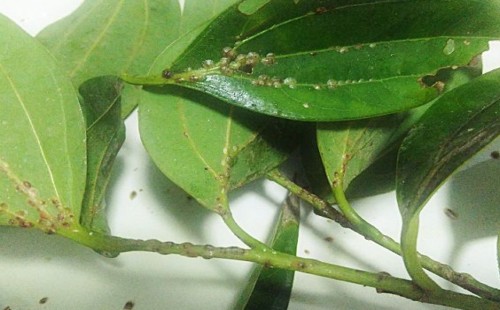
In fact, if the growing environment is unsuitable, Ping'an trees are also quite prone to pests and diseases. The parts of a Ping'an tree where bugs appear are mainly in three areas, namely: in the potting soil, on the trunk, branches and leaves, and on the flowers. Different parts tend to be infested by different pests. Generally, the potting soil is prone to pests such as millipedes and earthworms; the trunk, branches and leaves are prone to pests such as scale insects, mites and aphids; and the flowers mainly attract various small insects that come to feed on nectar, mostly small flying insects.
But no matter which pest it is, it is usually something we do not want to see. Surely no one wants to see all kinds of bugs on their potted Ping'an tree, right? To eliminate these pests, we generally need to handle them through a combination of manual removal and pesticide spraying. If there are relatively few pests, they can usually be removed by manual means; but if there are many types and large numbers of pests, pesticides are often needed for spraying. Common pesticides include trichlorfon and special scale-insect treatments. Generally, just dilute them with water in the correct ratio and spray a few times to eradicate the pests.
But note that whether you are removing bugs by hand or using pesticide sprays, the potted plant usually needs to be moved to a spacious, bright place. This not only makes it easier to observe the pests, but also makes spraying more convenient. Because pesticides can kill pests while also affecting human health, we should not spray pesticides indoors in poorly ventilated conditions, but should do it outdoors in a spacious, bright environment. This point is very important, and I hope everyone remembers it!
However, the above methods often only treat the symptoms, not the root cause. If you want to completely eradicate the problem, we also need to improve the care and management environment of the potted Ping'an tree. This is because potted Ping'an trees are often infested by pests due to hot weather, high humidity and poor ventilation. So we should avoid a hot, humid and unventilated growing environment. The Ping'an tree prefers a warm, humid growing environment, so we need to improve ventilation and increase light at the same time. This way we can eliminate the breeding ground for pests and thus prevent infestation.
It can be seen that pest and disease problems in potted Ping'an trees are mainly caused by a poor growing environment. To achieve both symptom relief and a cure for the root cause, we need to prevent and control the problem at its source and keep all pests and diseases out. This ensures that our potted Ping'an trees not only grow vigorously but also have high ornamental value, and can make the indoor environment healthier and fresher as well.