What are the symptoms of root rot in the Peace Lily tree?
The Peace Lily tree is evergreen year-round and has high ornamental value, so many people like to grow it as a potted houseplant. It can beautify the home environment, purify indoor air, and also carries the beautiful meaning of good fortune and well-being, so placing it as a potted plant in the home is very practical. But all of this can only be reflected on the premise that the potted Peace Lily tree is well cared for. In actual management, many people encounter the phenomenon of root rot in the Peace Lily tree, so what are the signs of root rot in the Peace Lily tree?
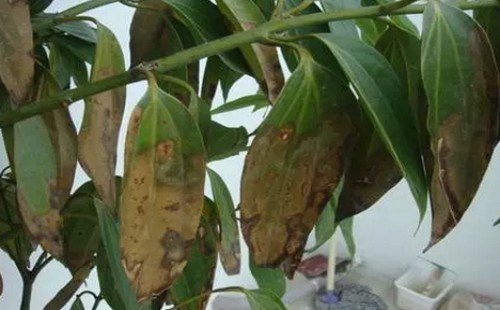
There are many causes of root rot in the Peace Lily tree: improper watering, excessive fertilizing, unsuitable soil, and so on. In fact, root rot in the Peace Lily tree is not that frightening. For growers with rich experience, it is nothing new. However, for beginners, it often leaves them at a loss. As for the Peace Lily tree after root rot appears, it is often shown through the plant's growth state, especially abnormalities in the branches and leaves.
Usually, in the early stage of root rot in the Peace Lily tree, its leaves gradually lose their luster, and this is soon accompanied by yellowing. Later, dry spots of varying sizes appear on the leaves. At this point, we can clearly see the plant's leaves drooping, wilting, and looking completely lifeless. After a while longer, the plant will show withered, yellowing, and falling branches and leaves. If it is left like this without timely remedial measures, the plant may at most die.
Therefore, in our daily care process, management methods must be scientific and reasonable, and management measures should also be appropriately adjusted according to the plant's growth performance. In particular, it should be noted that the root system of the Peace Lily tree is generally fibrous, and its absorption capacity is very limited, while the plant generally grows lush branches and leaves, so water and fertilizer management must be timely. But at the same time, precisely because its root system is relatively weak, excessive watering, overly high fertilizer concentration, or the use of raw fertilizer should be avoided; otherwise, the plant's root system is quite prone to damage and root rot.
Once we encounter phenomena such as wilting, yellowing, and falling branches and leaves of the plant, the first thing we need to consider is checking whether the roots of the plant in the pot have root rot. Once it is found, we should promptly remove the plant from the pot, clean away the rotted root parts, then carry out sterilization and disinfection treatment, and repot it. Not only that, the dry and yellowing branches and leaves should also be pruned away together. This can not only save nutrients, but also avoid expanding the yellowing area, and can further reduce the burden on the root system.
Usually, if the degree of root rot is not deep and the damaged root area is not extensive, by promptly adopting the above treatment methods, it can generally be saved. But if we leave it alone, then over time, the plant's root system will completely rot, and by then, even trying to save it will be hopeless, because the plant is basically in a dead state. It can be seen that when encountering root rot in the Peace Lily tree, rescue measures should be taken early rather than late; otherwise, it may bring us serious losses.