How to tell if a peace lily has root rot? These symptoms will tell you
Potted peace lilies keep their leaves and branches evergreen and look great for greening and beautifying, making them very practical as a household potted plant. But if the potted plant develops root rot, the plant's growth will inevitably be affected to varying degrees. Because the plant generally absorbs nutrients through its root system, once the roots rot, nutrients cannot be smoothly transported to the tree body. And because the plant cannot get enough nutrients, it often shows slow growth and may even stop growing. So how do you tell whether a peace lily has root rot?
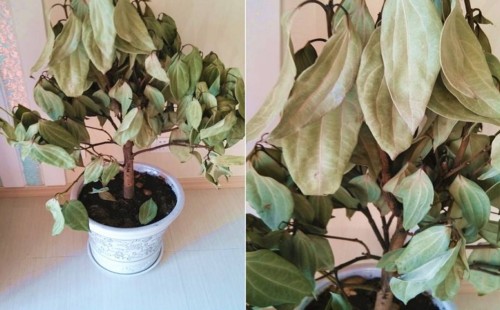
To judge whether a potted peace lily has root rot, we can identify it by observing, feeling, and other audio-visual experiences. Because the peace lily likes a moist growing environment, but its root system is mostly fibrous roots, its water-absorbing capacity is limited and it is not tolerant of water. Therefore, once watering is excessive and the plant's roots remain submerged or soaked in water for a long time, it often causes root suffocation, root stuffiness, root rot, and other phenomena, thereby causing its roots to lose their absorbing function.
In actual care and management, potted peace lilies generally develop root rot because of excessive watering. After a peace lily develops root rot, the plant's symptoms are also very obvious, the most common being yellowing leaves and branches, wilting, drooping, and falling off. So once a potted peace lily shows these poor growth symptoms for a long time, it is most likely caused by root rot from excessive watering. Of course, if this is still not enough to be certain, we can also combine other methods to make a judgment.
Besides observing the growth state of the leaves and branches of the potted peace lily, you can also observe the dryness and moisture of the potting soil to make a judgment. We can gently dig the potting soil to a certain depth and observe whether the deeper soil is too moist and whether there is standing water in the pot. If it is confirmed that the humidity in the pot is too high, it can often also be judged that excessive watering has caused root rot, which is why the plant shows various poor growth results.
Of course, we can also use a chopstick or a dry twig, insert it deep into the potting soil, and then take it out to observe whether it has been soaked. If the chopstick or dry twig is relatively dry, it means there is no standing water or excessive moisture in the pot; if the chopstick or dry twig is very wet, it means there is standing water in the pot. So this can also be used to judge that root rot has been caused by excessive watering leading to standing water in the pot.
Not only that, we can also gently tap the outer wall of the flowerpot with a tool and judge whether there is standing water in the pot by listening to the sound that comes back. If the echo is crisp, it means there is relatively little water in the pot; if the echo is dull, it means there is too much water in the pot. And in this case, it can also show to a certain extent that there is standing water in the pot, which may have caused root rot.
By comparison, the most direct method is to dig open the soil in the flowerpot and observe whether there is standing water deep at the bottom of the pot that has caused root rot, which is clear at a glance. However, because the peace lily's root system is mostly fibrous roots, you must be careful when doing this, because a slight mistake may injure a large number of roots, thereby deepening the degree of damage to the plant's root system.
Because peace lily root rot is mostly caused by excessive watering that prevents the roots from breathing, thereby breeding bacteria, especially in a stuffy, hot, and humid potting soil environment, root rot is often more likely to occur. So to judge whether the plant has root rot, besides observing the growth state of the leaves and branches, you should also observe the moisture condition in the pot, especially whether there is standing water. And to avoid root rot, although we need to create a warm and humid potting soil environment for it, in ordinary care and management of potted peace lilies, we also need to ensure moderate watering and smooth ventilation in the environment; otherwise, root rot in the plant is inevitable. And judging whether a peace lily has root rot is often done by combining observation of the plant's growth state with the moisture in the pot, and it is generally fairly easy to determine.