How to care for and manage roses in autumn? A full breakdown of the key points
In autumn, when there is more rainy and overcast weather, the temperature difference between day and night is usually very large: the temperature is somewhat higher during the day, and by night it becomes very low. In such a climate, potted roses tend to become very susceptible to disease. Especially after the beginning of autumn, when the day-night temperature difference is large and dew is heavy, roses are very prone to downy mildew.
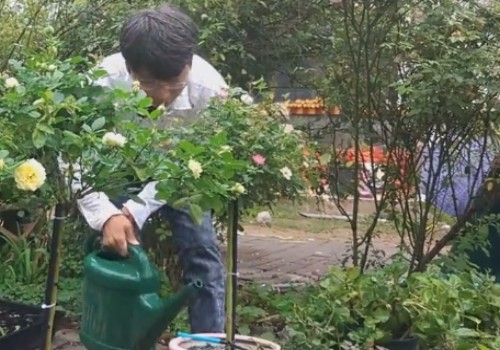
And once a rose develops downy mildew, it is often very difficult to cure, and the rose may lose all its leaves overnight, which is a very serious outcome for a flowering plant. So let us take this opportunity to discuss with you how to care for and manage roses in autumn.
Autumn is the second peak growing season of the year for roses; the plants will grow a large number of leaves and flower buds, especially a very large number of flower buds. Because roses grow quickly in autumn, and combined with this kind of autumn climate, the plants are very prone to disease. During this period, we especially need to pay attention to doing a good job of pest and disease prevention and control.
1. Spray broad-spectrum fungicides
To do a good job of pest and disease prevention and control, broad-spectrum fungicides should be sprayed promptly on potted roses after autumn arrives. If medicine is applied only after the potted roses have already become sick, the effect is often very poor. The method of spraying is also relatively simple; usually it is enough to spray broad-spectrum fungicides such as mancozeb or chlorothalonil.
There are also some points to note when spraying: both the front and back of the leaves must be sprayed evenly and completely, which will make the preventive effect against pests and diseases much better. This is because pests and diseases do not exist only on the front of the leaves; there are often more on the back of the leaves, and they are more hidden there.
2. Apply fertilizer scientifically and in a timely manner
Because roses grow especially fast in autumn, if fertilizer is not applied in time, it often leads to a lack of nutrients, and in this situation the roses may show unhealthy leaf growth. Generally, we use large pots to grow roses, so under normal circumstances it is enough to apply granular compound fertilizer to the roses.
As long as we use granular compound fertilizer correctly, the growth effect on roses is very good, and it is also very economical and affordable. Generally, we only need to scatter these granular fertilizers on the surface of the pot, or after scattering the fertilizer, mix it with the surface soil, and the topdressing effect will be better.
Of course, because the day-night temperature difference in autumn is usually large, rose leaves are relatively prone to unhealthy growth, so at this time we also need to apply some nitrogen-phosphorus-potassium fertilizer, which can promote the rapid maturation of the leaves. Otherwise, the rose leaves will remain tender, and are therefore especially susceptible to bacterial infection. At this time we need to frequently spray foliar fertilizer; potassium dihydrogen phosphate can be sprayed, and its effect on plant growth is very good.
Moreover, this kind of fertilizer is also very cheap. Spraying it on rose leaves can accelerate their maturation. In this way, the ability of potted roses to resist pests and diseases will also be further enhanced. Generally, use powdered potassium dihydrogen phosphate, like white granulated sugar, then dissolve it in water at a 1000-fold dilution and spray, spraying both the front and back of the leaves evenly.
Of course, we can also use some beneficial microorganisms, which can effectively resist the invasion of rhizobia, because roses are very prone to root nodules. If this kind of beneficial microorganism is used frequently, it can naturally inhibit the occurrence of rhizobia, so roses will be less likely to suffer from crown gall. When using it, generally dilute it with water at 500-1000 times, and then water the potted roses once every 1 month or half a month.
In this way, there will naturally be more beneficial microorganisms in the soil, and if there is excess fertilizer in the soil, the beneficial microorganisms can also decompose it, avoiding fertilizer damage and waste of resources, and effectively avoiding or reducing salinization of the potting soil.
Therefore, in the autumn care and management of potted roses, pest and disease control and fertilization management should be the focus. Especially fertilization: not only root topdressing, but also spraying foliar fertilizer to accelerate leaf maturation, then spraying some broad-spectrum fungicides, and then regularly watering with some beneficial microorganisms, and your roses will basically not have growth problems.