Causes and Solutions for Orchid Tip Burn and Root Rot
As people's understanding and awareness of green and eco-friendly concepts grow, more and more people are now growing potted flowers and plants at home, and more and more gardening friends are growing orchids. Growing orchids in home pots seems to have become an important part of our lives, even indispensable. Passionately growing orchids itself is also a rather pleasant way of life.
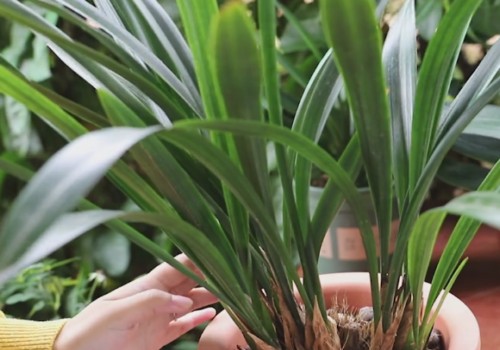
Now that autumn has arrived, the weather is getting cooler and cooler, and sometimes you can even feel a hint of cold. Orchids are also quite prone to tip burn and root rot in autumn and winter, so what should you do about orchid tip burn and root rot? During this period, we need to do a good job in two aspects of care and management, so as to ensure the plants grow vigorously.
1. Increase air humidity
Orchids are plants that prefer moist conditions and dislike dry environments, and the "moisture" mentioned here refers not only to the moisture of the potting soil, but more to the relative air humidity. Because in autumn and winter, the air humidity in the climate of many places is relatively low, and orchids do not like a dry growing environment. So when orchids are in such an environment for a long time, they are prone to tip burn.
To improve or avoid this situation, the air humidity in the growing environment of potted orchids should generally be kept at around 70%. And the methods for increasing air humidity are also very simple. Usually we just need to place a few basins of clean water on the indoor floor, or lay a wet blanket under the flower stand where the orchids are placed. Of course, you can also use a humidifier to spray into the space.
Doing this not only increases the air humidity in the environment, but also prevents the indoor temperature from getting too high, achieving a cooling effect, making both the ambient temperature and humidity more suitable for orchid growth. Indoors, it is generally appropriate to keep the temperature at around 25°C, which is more conducive to the free spreading of orchid stems and leaves.
2. Reduce potting soil moisture
If we grow orchids indoors and water them too much, combined with poor ventilation leading to poor air circulation, and under conditions of insufficient light, when the water is not consumed in time, the orchid plants are quite prone to root rot. At this point, in addition to strengthening ventilation and increasing light, we also need to promptly drain or neutralize the excess water in the orchid pot.
If for a while these excess water cannot be smoothly eliminated, we can use some substrates with good water absorption and add them to the orchid pot, simply mixing them with the moist soil. Common substrates with good water absorption mainly include perlite, bluestone, weathered stone, pine needles, etc. Of course, at the same time, we also need to promptly adjust the watering management to avoid similar situations happening again, ensuring the potting soil is neither dry nor wet.