What to Do When an Orchid Gets Sick? Common Disease Prevention and Treatment Methods
Orchids have always been deeply loved by gardeners, but during the growing process, plants infected with soft rot and stem rot are also the most headache-inducing problems. Today, the editor will offer some tips to help everyone solve these two most troublesome problems and help you protect your beloved potted orchids.
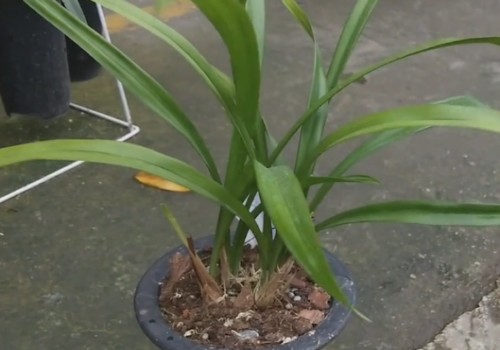
If the leaf base of an orchid turns black or yellow, and the yellowing appears from top to bottom, the most common cause is that the plant has been infected with soft rot or stem rot. So what should you do when an orchid gets sick? Regardless of which disease it is infected with, we need to treat it promptly.
Treatment of soft rot usually requires antibacterial agents, such as copper hydroxide, copper oxychloride, copper succinate-glutarate and other copper-based formulations; while treatment of stem rot usually uses antifungal agents, such as carbendazim, chlorothalonil, potassium permanganate and other chemicals. It can be seen that for different types of diseases infecting orchids, the chemicals we need to use are also different.
In a warm environment with poor ventilation and excessive humidity, potted orchids usually breed large numbers of anaerobic bacteria, and large numbers of bacterial spores will continuously multiply, causing the orchid to become diseased. Therefore, to prevent orchids from being infected by pathogens, smooth ventilation is a condition that must be guaranteed. If necessary, equipment such as fans can even be used to speed up air circulation.
In addition to meeting ventilation requirements, watering is also a major subject in caring for orchids well. For beginners, the first thing to consider is how to keep the orchid alive, and only then can you consider growing it well. It is generally recommended to use a loose, breathable growing medium with good drainage, while keeping the medium slightly on the dry side.
By taking the above measures, you can reduce the reproduction and spread of bacteria and pathogens, and at the same time avoid or reduce the chance of root rot caused by water accumulation in the pot. As for watering, it is usually recommended to wait until the medium about 2 cm below the surface has dried out. Watering should preferably be done in the evening, and do not mist the orchid leaves.
Of course, if you are a gardener with rich experience in growing potted orchids, you generally know how to handle watering safely, and can even water heavily without causing root rot in the orchid. Scientific watering can promote rapid sprouting of orchids, making seedlings grow faster and better. When problems are found, you should analyze them scientifically and solve them reasonably, so that potted orchids can be full of vitality.