How should I care for a kalanchoe (Kalanchoe blossfeldiana) that just came home with flower buds?
Many gardening enthusiasts report that although the kalanchoe they bought can grow flower buds, the blooming period is simply not long. Usually after a few days of blooming, the buds become shriveled, wilted, or even drop off. Could it be that the seller has done something to the potted kalanchoe plants being sold? So how should you care for a kalanchoe that just came home with flower buds?
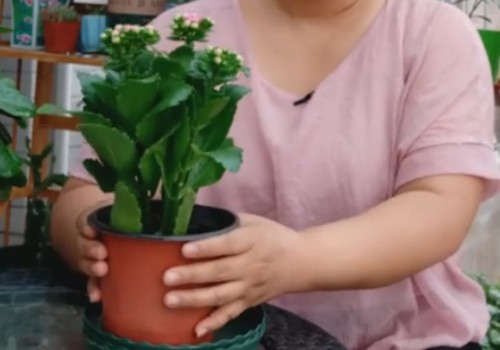
In fact, the above phenomena appearing in a kalanchoe you brought home are closely related to care and management. Although kalanchoe is a short-day plant, it needs sufficient light in order to bloom. If we put it in a low-light environment right after bringing it home, the kalanchoe will fail to open its buds smoothly due to lack of light.
Therefore, whether it was bought online or originally grown in your own pot, the kalanchoe should be placed in a spot with plenty of light for care. Generally, we need to provide it with 4-6 hours of light per day, so as to ensure the kalanchoe can smoothly open its buds and achieve full bloom.
However, we also need to pay attention at the same time. If the kalanchoe was just bought, it is generally not advisable to rush to give it direct sunlight. First, it should be placed in a well-ventilated spot where it can receive scattered light to acclimate. After all, when a plant is moved from one place to another, it goes through an acclimation process to adapt to the new environment, and as everyone knows, during the acclimation period plants cannot be given direct light, and especially strong sunlight should be avoided.
In the process of adapting to the new environment, besides paying attention to avoiding sunlight, the kalanchoe also requires good watering management. Generally, wait until the surface of the potting soil has dried, then first water it a little to moisten it; do not rush to give it a heavy watering. After about a week, we then move it to an environment with sufficient light for care. But at the same time, the light intensity still needs to be controlled; the light must not be too strong, and the light it receives should also be increased gradually.
At the same time, watering at this point should be timely, and there must not be any water shortage. This is because at this time the kalanchoe not only has a lot of stems and leaves, but also a great many flower buds, so as long as care and management are done properly, the amount of bloom is often very large. Therefore, to maintain normal growth, sufficient water is needed, but not in excess; make sure the potting soil is loose and breathable with good drainage, and water thoroughly, but without causing water to accumulate in the pot.
Moreover, if after watering thoroughly the excess water flows out into the tray, the water in the tray should be poured out promptly. Otherwise, because there is too much water in the tray, it may continue to seep through the drainage holes at the bottom of the pot into the potting soil, causing the inside of the pot to remain overly moist. In that case, there may still be a risk of root rot.
But during this period, we must not fertilize it. Because if the kalanchoe has many buds when we bring it home, fertilizing can easily cause the buds to drop. Moreover, before being bought, the plant is generally cared for in a greenhouse, so it is very susceptible to the influence of the external environment. Therefore, after we bring it home, usually we only need to do a good job with light and water management.
The blooming period of kalanchoe is very long. If our care and management work is done well, the blooming period can last for several months. If we grow it as a household potted plant and want to prolong its blooming period a little, we need to wait until more than half of its buds have opened, then move the pot to a slightly shadier spot for care. In this way, we can achieve the goal of prolonging the blooming period by adjusting the light.