How to grow orchids to promote flower bud differentiation
When growing orchids in pots, if we take proper care and management, their flowering period can be longer and the flowers will be more beautiful. Conversely, if the care and management are improper, it may lead to orchids struggling to bloom. For a flowering plant, this is the last thing we want to see. Promoting flower bud differentiation in orchids is the key to ensuring they bloom, but to successfully promote flower bud differentiation, daily care and management must be done well. So, how should orchids be grown to promote flower bud differentiation?
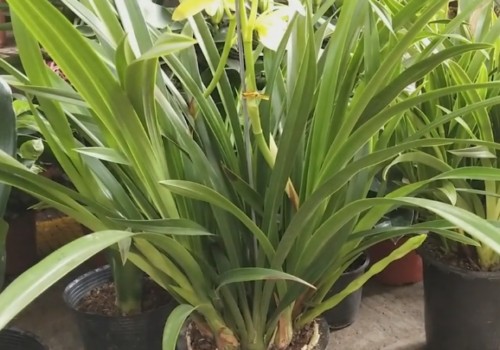
1. Reasonable lighting
Orchids at the seedling stage do not have very high light requirements; generally, placing them in a semi-shaded environment for care and management is sufficient. But mature plants prefer a space with plenty of scattered light. In spring, summer and autumn, full sunlight can be provided in the morning and evening, with appropriate shading at noon, while in winter, full-day light can be provided. However, too strong light easily burns orchid leaves, while too weak light easily causes leggy growth of orchid leaves, resulting in poor flowering and thus affecting the ornamental value.
2. Adjusting temperature
Temperature is one of the most important factors for growing orchids well, especially one of the key conditions for ensuring they bloom smoothly on schedule. The most suitable growing temperature for orchids is usually between 15°C-30°C, but indoors in summer, the temperature often exceeds 30°C. At this time, we can place potted orchids in a well-ventilated semi-shaded spot, which is more conducive to getting them through summer smoothly.
But orchids usually need a relatively low-temperature environment to promote and complete flower bud differentiation. Generally, keeping the ambient temperature within 20°C can achieve the purpose of promoting flowering. However, the temperature cannot be too low either. If the ambient temperature is below 5°C, this is very unfavorable for the development of orchid flower buds, and the plant is even more prone to frost damage.
3. Maintaining humidity
Orchids prefer a moist growing environment. During the growing period, the potting soil should be kept as moist as possible to ensure suitable humidity in the pot to promote growth, especially root growth. However, if the humidity in the pot is too high, it easily causes root rot. If the weather is dry, it is also necessary to spray water on the leaves of the plant to maintain moisture, thereby creating a microclimate environment that is more conducive to orchid growth and even promotes flower bud differentiation.
4. Scientific fertilizing
To keep orchids growing robustly, especially to maintain vigorous growth and achieve smooth flowering, nutrients are indispensable. In the spring and autumn growing seasons, we need to apply more fertilizer to orchids. In addition to meeting their own growth needs, it can also effectively promote flowering. The fertilizer is usually mainly organic fertilizer, supplemented by inorganic fertilizer, with topdressing of nitrogen, phosphorus and potassium elements as the main focus.
5. Pruning and repotting
After orchids finish flowering, the flower stems should generally be cut off promptly, and the work of repotting and changing the soil should be done well. After removing the plant from the pot, remove the old soil from the roots, appropriately trim the roots and cut the leaves, then replace with new potting soil and replant it in the pot, and continue to do a good job of care and management.